

TEHRAN/JERUSALEM/DORAL, Florida: U.S. President Donald Trump said Monday that the war in the Middle East could end soon, even as Iran’s hardliners rallied behind newly declared Supreme Leader Mojtaba Khamenei, signaling the country is unlikely to back down.
The mixed signals triggered sharp swings in global markets. Oil prices surged and stock markets plunged before stabilizing after Trump suggested the conflict might end quickly and hinted at possible easing of sanctions on Russian energy exports.
Khamenei, 56, a Shi’ite cleric with strong ties to Iran’s security forces and their extensive economic network, has been rejected by Washington. Trump has demanded Iran’s unconditional surrender.
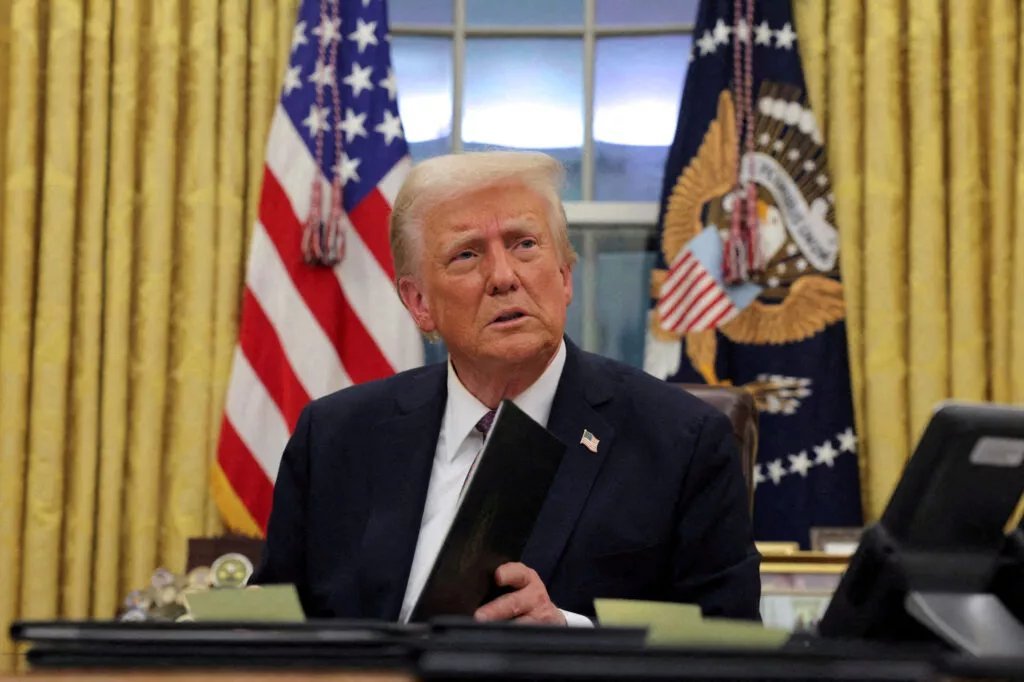
Speaking to Republican lawmakers, Trump said the conflict would continue until Iran is “totally and decisively defeated.” However, he also predicted the fighting could end soon.
“It’s going to be finished pretty quickly,” Trump said. “We’ve already won in many ways, but we haven’t won enough.”
The U.S. president did not specify what conditions would constitute victory in the conflict.
Iran’s Political System Rallies Behind New Leader
Iranian state television broadcast images of large crowds in multiple cities demonstrating support for Mojtaba Khamenei. Protesters waved Iranian flags and held portraits of his father, Ali Khamenei, the longtime supreme leader who was killed in an Israeli strike on the first day of the war.
In the central city of Isfahan, state media reported explosions nearby during apparent airstrikes as supporters gathered in historic Imam Square, chanting religious slogans beneath banners displaying images of both Ali and Mojtaba Khamenei.
Iran’s military also announced plans to intensify missile strikes, signaling continued resistance.
Government institutions and political leaders issued statements pledging loyalty to the new supreme leader, whose wife, son, and mother were also reportedly killed at the start of the U.S.-Israeli air campaign, according to Iranian state media.
“We will obey the commander-in-chief until the last drop of our blood,” a statement from Iran’s defense council said.
Opinions among Iranians appear divided. Some supporters praised the leadership transition as a show of strength, while others fear it may eliminate hopes for political reform.
“I am so happy that he is our new leader,” said Zahra Mirbagheri, a 21-year-old university student in Tehran. “It was a slap in the face to our enemies who thought the system would collapse after our leader was killed.”
Others expressed pessimism about change.
“The Revolutionary Guards and the system are still powerful,” said Babak, a 34-year-old businessman from Arak who asked to remain anonymous. “They have tens of thousands of forces ready to defend the regime. We, the people, have nothing.”
War Goals Remain Unclear
Israel says its goal is to overthrow Iran’s clerical ruling system, while U.S. officials have largely framed Washington’s objective as destroying Iran’s missile capabilities and nuclear program.
However, Trump has suggested the war could only end if Iran installs a government willing to comply with U.S. demands.
Israel previously warned it would target any successor to the elder Khamenei unless Iran abandoned its hostile policies.
Oil Prices Surge Amid Strait of Hormuz Disruption
The conflict has effectively shut down the Strait of Hormuz, a critical shipping route responsible for roughly 20% of global oil and liquefied natural gas supplies. Tankers have been unable to pass for more than a week, forcing some producers to halt pumping as storage facilities fill.
Brent crude futures rose about 7%, reaching their highest level since 2022 after briefly jumping as much as 29% during trading, as Saudi Arabia and other OPEC members reduced supply. Prices later eased in after-hours trading.
Rising gasoline prices have major political implications in the United States ahead of November’s midterm elections, where Republicans aim to maintain control of Congress.
A Ipsos poll released Monday found 67% of Americans expect fuel prices to rise in the coming months, while only 29% approve of the war.
Following a conversation with Russian President Vladimir Putin, Trump said the United States may waive oil-related sanctions on “some countries” to ease global shortages.
Sources say this could include further easing restrictions on Russian oil exports, potentially complicating Western efforts to punish Moscow over the war in Ukraine.
Other options being considered include releasing oil from U.S. strategic reserves or restricting American exports.
Oil Refinery Strike Raises Environmental Concerns
Thick black smoke filled the skies over Tehran after an oil refinery was struck in an attack targeting Iran’s domestic energy infrastructure.
World Health Organization Director-General Tedros Adhanom Ghebreyesus warned that the fire could contaminate food supplies, water sources, and air quality in surrounding areas.
Meanwhile, Turkey reported that NATO air defenses shot down a ballistic missile fired from Iran that entered Turkish airspace, marking the second such incident during the conflict.
Turkey, which has NATO’s second-largest military, previously warned Tehran against further violations but has not formally requested additional alliance protection.
Regional Fighting Intensifies
Israel’s military said it carried out new airstrikes in central Iran and also struck Beirut, expanding its campaign after the Iran-backed militant group Hezbollah fired rockets across the border.
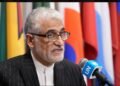
According to Iran’s ambassador to the United Nations, at least 1,332 Iranian civilians have been killed and thousands wounded in U.S.-Israeli attacks.
Lebanese officials report more than 400 people killed and nearly 700,000 displaced by the escalating conflict.
In Israel, emergency services said one man died from shrapnel injuries at a construction site near Tel Aviv’s Ben Gurion International Airport, bringing the total Israeli death toll from Iranian strikes to 11.
-Crispian Sullivan