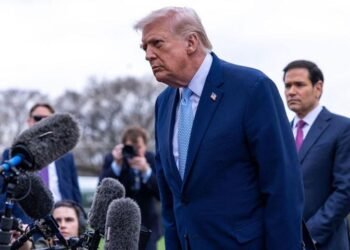



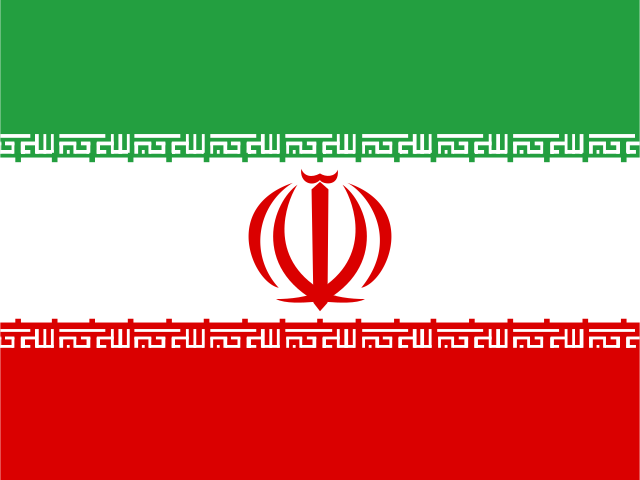
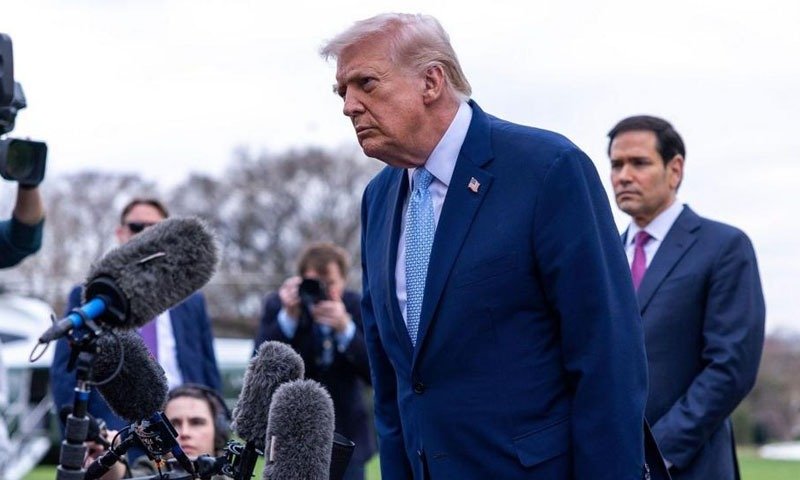
WASHINGTON/JERUSALEM/TEL AVIV: U.S. President Donald Trump has postponed a threatened strike on Iran’s electricity infrastructure for five days, signalling a possible diplomatic opening even as Tehran publicly denied that negotiations with Washington were underway to end the escalating U.S.–Israeli war against Iran.
Trump said the United States had engaged in what he described as “very good and productive” conversations with Iranian interlocutors over the past two days regarding a “complete and total resolution of hostilities in the Middle East.” However, Iran’s Parliamentary Speaker Mohammad Baqer Qalibaf dismissed those claims, stating on social media that no talks with the United States had taken place.
The conflicting messaging reflects the opaque and volatile diplomatic environment surrounding one of the most dangerous regional confrontations in decades, even as financial markets reacted strongly to the prospect of negotiations.
Global energy markets rallied on expectations of de-escalation, with the Brent crude benchmark falling roughly 8% to near $103 per barrel, while U.S. equity markets climbed more than 2% as investors anticipated that diplomacy could prevent further escalation of the conflict.
The market optimism came despite Iran’s effective closure of the Strait of Hormuz, through which nearly one-fifth of global oil and liquefied natural gas shipments transit, marking one of the most serious disruptions to global energy flows in recent history.
Trump confirmed that his special envoy Steve Witkoff and senior adviser Jared Kushner had held discussions with a senior Iranian figure late Sunday and were expected to continue contacts this week. He declined to identify the Iranian counterpart but emphasized that discussions were not taking place directly with Iran’s supreme leadership.
According to diplomatic sources cited by WorldAffairs, contacts involving Iranian and U.S. representatives could take place in Islamabad as early as this week, with mediation reportedly supported by Egypt, Turkey, and Pakistan. Regional officials have suggested that Qalibaf’s influence has expanded under wartime conditions, potentially positioning him as a key interlocutor despite Tehran’s continued public denial of negotiations.
Although Mojtaba Khamenei formally holds ultimate authority within Iran’s leadership structure following the Israeli strike that reshaped the country’s political hierarchy at the start of the war, regional analysts increasingly assess that operational decision-making has shifted toward the Islamic Revolutionary Guard Corps, which now appears to exercise decisive influence over foreign policy and wartime strategy.
A source familiar with Israeli war planning told WorldAffairs that Washington had coordinated its contacts with Tehran closely with Israeli authorities and that Benjamin Netanyahu’s government was expected to follow the U.S. lead in suspending planned strikes on Iranian power infrastructure for the duration of the diplomatic window.
Earlier, Trump had warned that Iranian power plants would be destroyed unless Tehran fully reopened the Strait of Hormuz within 48 hours. The Islamic Revolutionary Guard Corps responded with warnings that attacks on Iranian electricity infrastructure would trigger retaliatory strikes on Israeli energy systems and facilities supporting U.S. military bases across the region.
Iran’s Defence Council further escalated its warnings by stating that Tehran could lay sea mines to shut Gulf shipping routes entirely if attacks proceeded, raising fears of a broader maritime confrontation that could severely disrupt global trade and energy supplies.
The threat of strikes on regional electricity systems has generated alarm across Gulf capitals, where desalination plants depend heavily on uninterrupted power supply.
Electricity infrastructure underpins nearly all potable water production in Bahrain and Qatar, more than 80% of drinking water supply in the United Arab Emirates, and roughly half of potable water production in Saudi Arabia, making energy infrastructure a critical humanitarian vulnerability in any escalation scenario.
According to Fatih Birol, executive director of the International Energy Agency, the emerging energy disruption already exceeds the combined impact of the oil shocks of the 1970s and the energy crisis triggered by Russia’s invasion of Ukraine.
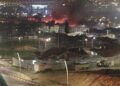
Iranian media reported fresh strikes on Israeli positions and U.S. military facilities across the region on Monday, while Israeli forces launched another large wave of infrastructure attacks inside Tehran. Iranian authorities reported six fatalities and 43 injuries following strikes on residential buildings in Khorramabad, with emergency responders seen rescuing civilians from heavily damaged apartment complexes in northern Tehran.
Across the Gulf, the Saudi defence ministry confirmed that two ballistic missiles were launched toward Riyadh. One was intercepted while the other landed in an uninhabited area.
With more than 2,000 people already killed since the war began on February 28, Washington’s temporary pause on strikes against Iranian power infrastructure may represent the most significant diplomatic opening yet to prevent a wider regional escalation. However, the gap between public denials from Tehran and optimistic signals from Washington suggests that any breakthrough remains fragile and uncertain as the conflict continues to reshape the Middle East’s strategic landscape.
-Phil Slattery, Maayan Cornwell and Sharon Liffey