



WASHINGTON : Iran launched a series of missile strikes late Saturday targeting areas close to Israel’s primary nuclear research facility in the Negev desert, injuring dozens and marking a significant escalation as the conflict entered its fourth week.
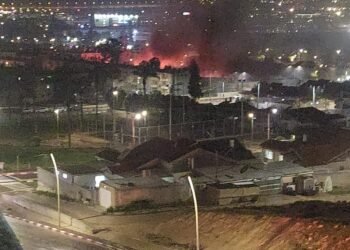
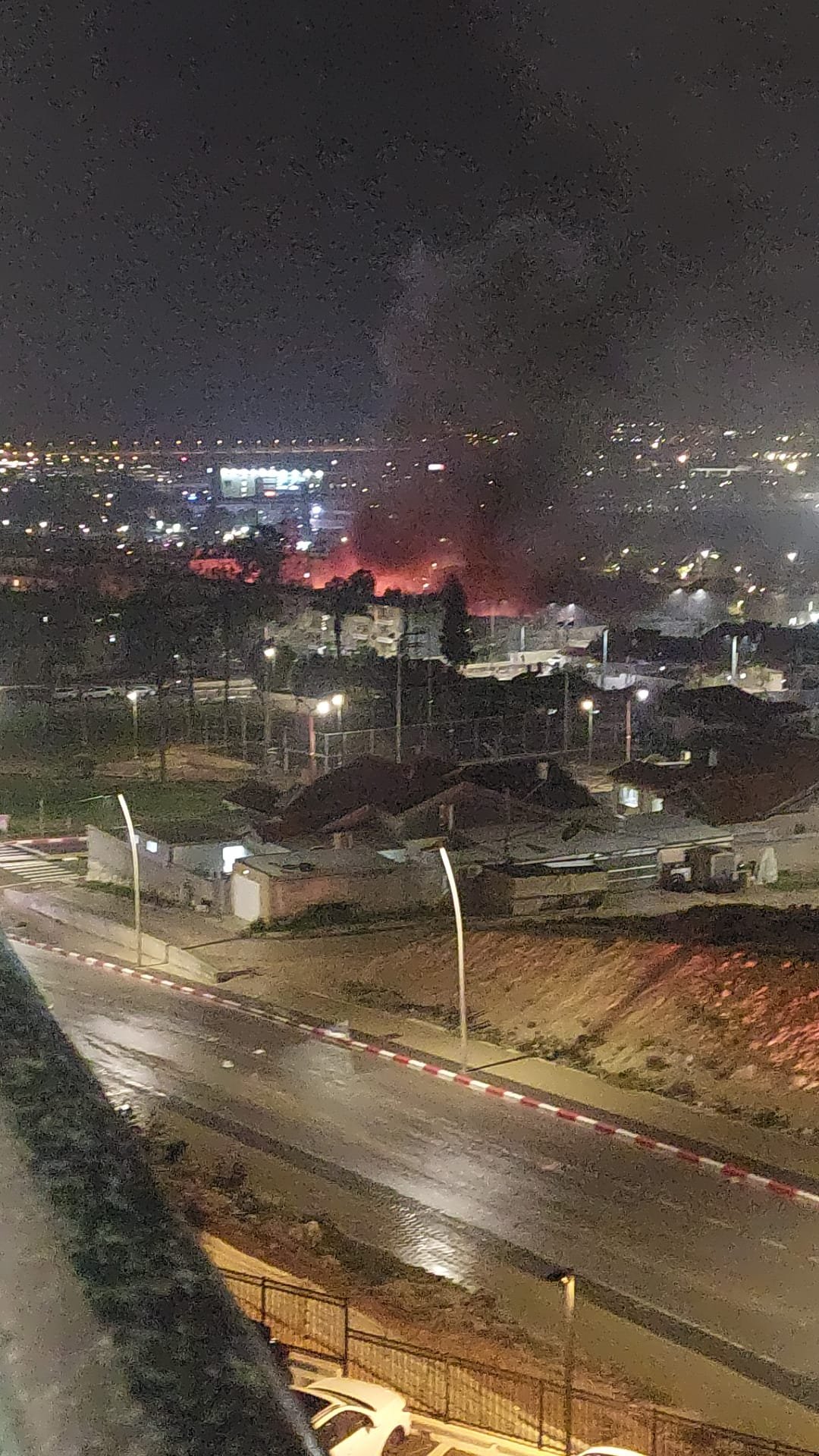
Explosions rocked the southern cities of Dimona and Arad both located near the highly sensitive nuclear research center in what Israeli officials described as one of the most serious attacks on strategic infrastructure since the war began. Emergency services reported widespread destruction, with multiple residential buildings damaged and at least seven people critically injured. More than 60 others were hospitalized.
This is the first known instance in the ongoing conflict where areas surrounding Israel’s nuclear research complex have been directly targeted. Israel’s military acknowledged that some incoming missiles were not intercepted, raising concerns about gaps in its air defense systems.
Prime Minister Benjamin Netanyahu called the situation “extremely grave,” confirming that additional emergency and security resources were being deployed. Military Chief Gen. Eyal Zamir warned earlier that the war was far from over, signaling a prolonged and potentially intensifying confrontation.
In a parallel development, Iran attempted a long-range strike on the joint U.K.-U.S. military base at Diego Garcia in the Indian Ocean. Although the attack was unsuccessful, it highlighted Tehran’s expanding missile reach or the possible adaptation of its space-launch technology for military use.
The escalation followed reported strikes on Iran’s nuclear facilities, including Natanz, earlier in the day. While Israel denied involvement, Iranian authorities insisted there was no radiation leak or major damage. International nuclear monitors said they were assessing the situation but had not detected abnormal radiation levels.
The broader conflict continues to generate global repercussions. Disruptions to energy infrastructure and shipping routes have driven fuel prices sharply higher, adding pressure to already strained global markets.
Images from the affected Israeli areas showed a large crater near residential complexes, with several apartment buildings severely damaged. Rescue teams said at least 10 buildings were impacted in Arad alone, with some at risk of collapse.
Dimona lies roughly 20 kilometers from the nuclear research center, while Arad is about 35 kilometers away, placing both within a sensitive strategic zone. Despite longstanding ambiguity, Israel is widely believed to possess nuclear capabilities, though it has never officially confirmed this.
Iranian officials framed the strikes as a demonstration of evolving military capability. Parliamentary Speaker Mohammad Bagher Ghalibaf suggested that Israel’s inability to intercept missiles near such a heavily defended site indicates a “new phase” in the conflict.
Meanwhile, tensions are extending beyond immediate battle zones. Gulf countries reported increased aerial threats, including drone interceptions in Saudi Arabia and missile alerts in the United Arab Emirates.
On the maritime front, concerns remain high over the security of the Strait of Hormuz, a critical artery for global oil shipments. Multiple countries have expressed readiness to ensure safe passage, even as risks of further disruption persist.
The United States is also reinforcing its military posture, with additional amphibious ships and thousands of Marines heading to the region, according to officials speaking to WorldAffairs. The move underscores growing fears of a wider regional conflict.
Casualties continue to rise across multiple fronts. Iranian state media reports over 1,500 deaths, while Israel has confirmed fatalities from missile strikes and ongoing clashes. Violence has also intensified in Lebanon, where Israeli forces and Hezbollah militants are engaged in active combat.
With strategic targets increasingly in focus and the battlefield expanding geographically, the conflict appears to be entering a more volatile and unpredictable stage one with far-reaching consequences for regional stability and global security.
-Patricia Mackenzie