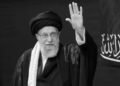



WASHINGTON: A newly reviewed U.S. intelligence assessment warns that Iran and its network of regional proxies could launch retaliatory attacks against American interests following the reported killing of Iranian Supreme Leader Ali Khamenei in joint Israeli and U.S. strikes.
The February 28 assessment, prepared by the Department of Homeland Security’s Office of Intelligence and Analysis and reviewed by WorldAffairs, concludes that while a large-scale assault on U.S. soil remains unlikely, the risk of targeted attacks has increased.
According to the report, Iran and affiliated groups “probably” pose an ongoing threat to the U.S. homeland. Officials caution that retaliation could intensify if confirmation of Khamenei’s death continues to fuel anger among Iranian leadership and supporters.
Cyberattacks Seen as Immediate Risk
In the near term, U.S. analysts believe Iran-aligned “hacktivist” groups present the most immediate concern. These actors are expected to carry out low-level cyber operations, including website defacements and distributed denial-of-service (DDoS) attacks targeting American networks and institutions.
“Although a large-scale physical attack is unlikely, Iran and its proxies probably pose a persistent threat of targeted attacks in the Homeland,” the DHS report states, adding that retaliatory rhetoric and calls for action would almost certainly escalate following official confirmation of the Ayatollah’s death.
Homeland Security Secretary Kristi Noem said federal agencies are actively coordinating to address emerging risks.
“I am in direct coordination with our federal intelligence and law enforcement partners as we continue to closely monitor and thwart any potential threats to the homeland,” Noem said in a statement.
Regional Conflict Expands
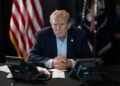
Iran officially confirmed Khamenei’s death on Sunday after initial announcements from Israeli officials and U.S. President Donald Trump. The confirmation has further inflamed tensions in an already volatile region.
The intelligence assessment indicates Iran will likely continue military actions against U.S. and allied interests across the Middle East. It also suggests Tehran could publicly blame senior U.S. officials for unrest or protests triggered by Washington’s rhetoric supporting regime change.
Meanwhile, hostilities have broadened beyond Iran’s borders. Israel expanded strikes into Lebanon following Hezbollah attacks, while Iran sustained missile and drone operations against Gulf nations hosting U.S. military bases.
Domestic Security Concerns
In the United States, authorities are investigating whether global tensions played any role in a deadly shooting at a bar in Austin, Texas, on Sunday that left at least two people dead. Officials emphasized it remains too early to determine the gunman’s motive.
A photo obtained by WorldAffairs showed the suspect, who was killed by police wearing a shirt bearing an Iranian flag and the word “IRAN” in green, white, and red lettering. A U.S. law enforcement official said he was also wearing a sweatshirt reading “Property of Allah.”
Investigators have not established any confirmed connection between the shooting and the broader geopolitical crisis.
-Michael Schmollinger