


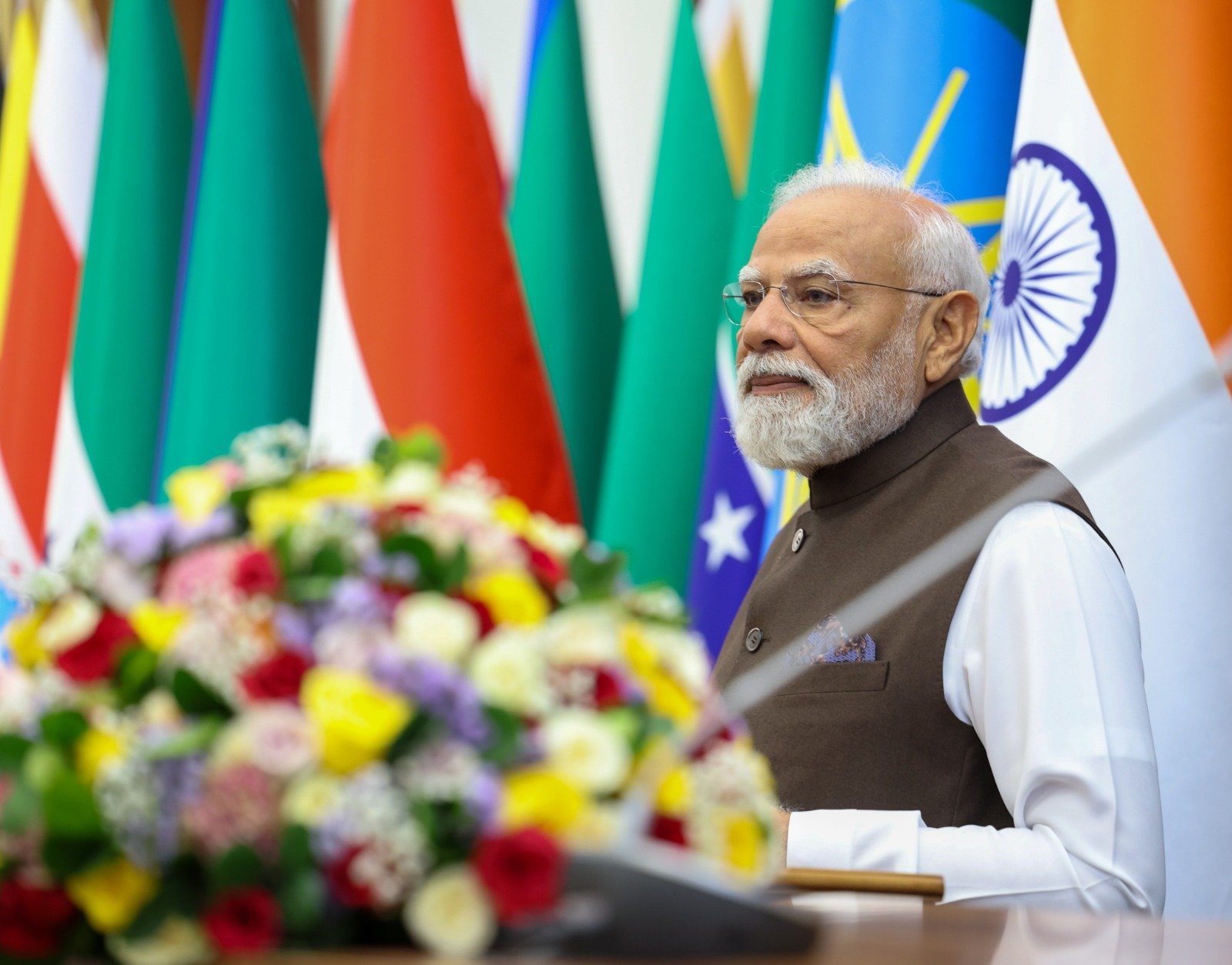
NEW DELHI/ AMMAN/ ADDIS ABABA: Prime Minister Narendra Modi’s three-nation visit to Jordan, Ethiopia and Oman from 15–18 December 2025 marks a carefully sequenced diplomatic push that reflects India’s expanding political, economic and security ambitions across West Asia, the Horn of Africa and the Gulf. Taken together, the itinerary signals New Delhi’s intent to consolidate its western maritime and continental flank through calibrated partnerships that blend diplomacy, development cooperation and strategic engagement.
The Jordan leg carried both symbolic and substantive weight. Modi’s visit, the first full bilateral engagement by an Indian prime minister in nearly four decades, coincided with the 75th anniversary of India–Jordan diplomatic relations and underscored Amman’s renewed relevance in India’s West Asia calculus. Extensive discussions with King Abdullah II, Prime Minister Jafar Hassan and Crown Prince Al-Hussein covered the breadth of bilateral ties as well as regional developments, including security challenges and counter-terrorism cooperation. The signing of multiple memoranda of understanding in areas such as water resources management, renewable and new energy, digital cooperation, culture and heritage, and education and technology provided a forward-looking framework for modernising the partnership.
With bilateral trade having crossed the multi-billion-dollar mark, both sides emphasised diversification beyond traditional commodities and highlighted new opportunities in renewables, water security, digital transformation and tourism. Initiatives such as the proposed twinning of Petra with India’s Ellora Caves reflected an effort to add a strong people-centric and cultural dimension to the relationship. The ceremonial warmth of the visit, including the Crown Prince’s personal engagement, reinforced Jordan’s image as a moderate, stable and strategically located partner for India in a volatile region.
From the Levant, the focus shifted to the Horn of Africa, where Modi’s first State visit to Ethiopia marked a qualitative upgrade in bilateral ties. The decision to elevate the relationship to a Strategic Partnership reflected converging interests as two prominent voices of the Global South. Addressing the Ethiopian Parliament, Modi framed India and Ethiopia as natural partners bound by civilisational links, shared aspirations for development and a common vision of a more equitable global order.
Defense cooperation emerged as a key pillar, anchored in a new agreement aimed at closer military engagement, training and capacity-building. Economically, the visit sought to build on India’s already significant footprint, with Indian companies having invested billions of dollars and generated large-scale employment. The emphasis now is on leveraging India’s experience in Digital Public Infrastructure, technology transfer, skills development and emerging areas such as artificial intelligence, alongside cooperation in health, education and manufacturing. India’s assistance during the COVID-19 pandemic, particularly vaccine supplies, was highlighted as a practical demonstration of South–South solidarity.
The Strategic Partnership is intended to bring coherence to an increasingly dense web of cooperation spanning defence, development partnership, digital transformation, capacity-building and coordination in multilateral forums.
The final stop in Oman brings the outreach back to the Gulf, a region central to India’s energy security, trade and diaspora interests. Oman’s long-standing maritime links with India and its strategic location at the mouth of the Arabian Sea give it particular importance in New Delhi’s extended neighbourhood and Indo-Pacific outlook. Talks with Sultan Haitham bin Tarik are expected to review the full spectrum of ties, including hydrocarbons and renewable energy, defence and maritime cooperation, trade and investment, connectivity and the welfare of the large Indian community. Beyond consolidating traditional areas of cooperation, the visit is likely to explore new opportunities in logistics, ports, digital connectivity and joint industrial ventures, while also providing a platform for coordinating positions on regional stability in the Gulf and the wider Indian Ocean region.
Viewed together, the three stops reveal a deliberate, multi-vector strategy. In West Asia, through Jordan and Oman, India is deepening ties with moderate and strategically located partners on energy, water security, connectivity and regional stability. In the Horn of Africa, the Strategic Partnership with Ethiopia anchors India’s growing engagement with Africa in defence cooperation, digital development and a shared Global South agenda. This triangulated outreach underlines New Delhi’s effort to position itself as a reliable, long-term partner across a critical arc linking the Levant, the Red Sea, the Horn of Africa and the Gulf. By weaving together diplomacy, development and defence, India is seeking not episodic influence but enduring presence across a region that is increasingly central to its economic interests and geopolitical ambitions.
– Dr. Shahid Siddiqui; follow via X @shahidsiddiqui