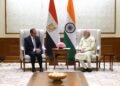



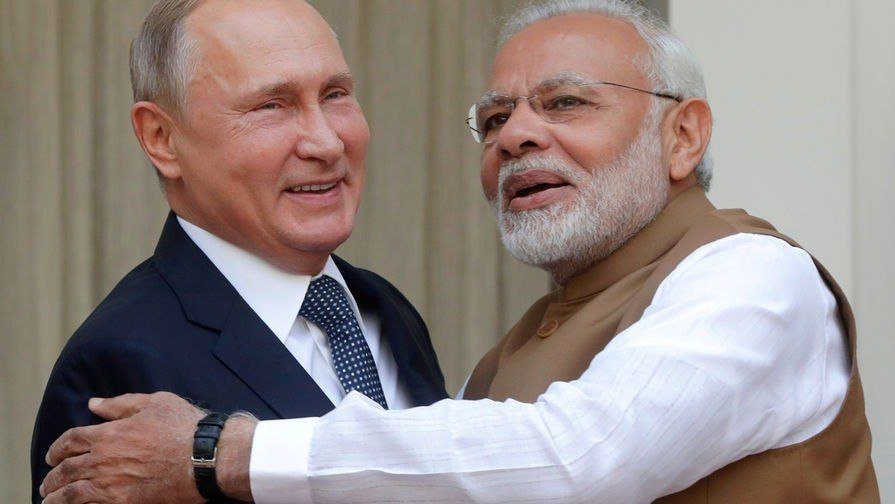
NEW DELHI: Russian President Vladimir Putin’s December 4-5 state visit to India arrives at perhaps the most delicate moment in the seven-decade relationship between Moscow and New Delhi. While both leaders will undoubtedly emphasize the enduring strength of their “privileged strategic partnership,” the underlying reality reveals a far more complex dynamic, one that offers crucial insights into how middle powers can navigate an increasingly polarized global order without sacrificing their strategic independence.
The numbers tell the real story. India’s Russian oil imports are set to plummet to three-year lows in December, a dramatic reversal from November’s multi-month highs. Simultaneously, India has purchased $30 billion worth of American defense equipment over the past decade while maintaining that it will not abandon defense cooperation with Russia “anytime soon.” This apparent contradiction is not diplomatic doublespeak, it is the essence of strategic autonomy in practice.
India’s approach to managing its Russian relationship demonstrates sophisticated understanding of contemporary geopolitical realities. By proactively reducing oil imports before being compelled to do so, New Delhi preserves the appearance of voluntary decision-making while avoiding Western sanctions designation. The reduction serves multiple audiences: it provides Washington with tangible evidence of Indian responsiveness to American concerns while offering Moscow face-saving explanations that portray India as maintaining support despite external pressure.
This calibrated approach extends beyond energy to defense procurement, where India has systematically diversified suppliers without dramatically abandoning Russian systems. French Rafale fighters complement Russian Sukhois. American surveillance systems augment Russian radar networks. Israeli missile technology supplements Russian platforms. Rather than representing betrayal of Moscow, this diversification reflects India’s determination to avoid the vulnerabilities that come with over-dependence on any single supplier, particularly one subject to international sanctions.
The Trump administration’s aggressive linking of trade benefits to reduced Russian oil purchases reveals a fundamental misunderstanding of Indian strategic culture. The 25% tariff imposed on Indian goods in August, characterized by Moscow as “illegal trade pressure,” demonstrates crude transactional thinking that ultimately reinforces the very concerns driving Indian strategic autonomy doctrine. By showing that American trade benefits are conditional on foreign policy alignment, Trump has inadvertently strengthened Indian resolve to maintain multiple partnerships without exclusive dependence on Washington.
Yet India’s tactical concessions, the oil import reductions should not be misinterpreted as strategic surrender. The simultaneous hosting of Putin’s state visit while reducing energy purchases perfectly illustrates India’s sophisticated balancing act. New Delhi understands that partnerships based on coercion rather than mutual interest are inherently fragile, whether the coercion comes from Washington or Moscow.
The China variable provides crucial context often missing from discussions of India-Russia relations. Both New Delhi and Moscow share deep concerns about Beijing’s growing regional assertiveness, creating common interests that transcend current Ukraine-related complications. For India, maintaining Russian partnership serves multiple China-related objectives: preserving access to crucial weapons systems for potential border conflicts, maintaining diplomatic balance in multilateral forums, and keeping open strategic options for coordinated responses to Chinese expansion. For Russia, Indian partnership offers validation that major powers can resist Western pressure while providing economic alternatives to excessive Chinese dependence.
This explains why both nations have enduring incentives to preserve their relationship despite current strains. Neither can afford isolation with China as their primary regional partner, creating structural incentives for cooperation that transcend temporary geopolitical pressures.
The broader economic relationship reveals similar evolution patterns. While energy and defense dominate headlines, trade diversification efforts, sanctions-resistant payment mechanisms, and third-country partnerships will likely feature prominently in Putin’s discussions with Modi. However, structural constraints remain formidable. Western sanctions create compliance costs and reputational risks for Indian companies, while alternative payment systems, though technically feasible, increase transaction costs significantly.
The institutional framework of annual India-Russia summits provides important continuity amid changing circumstances. These meetings, occurring regardless of international tensions, demonstrate both nations’ commitment to maintaining dialogue channels. For Moscow, Putin’s participation validates claims that Western sanctions have failed to achieve comprehensive isolation. For India, hosting the summit demonstrates that strategic autonomy principles apply regardless of external pressure.
Looking ahead, the relationship will likely undergo managed evolution rather than strategic rupture. Short-term trends point toward continued gradual reduction in Russian oil imports to levels that avoid sanctions triggers, maintenance of existing defense contracts while diversifying new procurement, and enhanced focus on sanctions-compliant cooperation sectors. Medium-term trajectories suggest Russian energy imports will stabilize at reduced but significant levels, defense partnerships will evolve toward technology transfer rather than platform purchases, and economic cooperation will diversify beyond traditional energy-defense sectors.
The Indian model offers valuable lessons for middle powers worldwide facing pressure to choose sides in increasingly bipolar great power competition. Key principles include maintaining tactical flexibility while preserving strategic consistency, reducing vulnerability through diversification rather than exclusive alignment, sustaining institutional dialogue mechanisms regardless of temporary tensions, and separating economic cooperation from political alignment based on practical rather than ideological considerations.
India’s approach suggests that middle powers with sufficient economic and political capacity can successfully resist binary choices imposed by great power competition, provided they possess the diplomatic sophistication to manage multiple partnerships simultaneously.
Putin’s Delhi visit represents neither triumph nor collapse of traditional alliance systems, but their evolution into more complex, conditional arrangements. Success should be measured not by communiqué language but by both nations’ ability to preserve cooperation channels while adapting to changing circumstances. If Putin and Modi achieve this balance maintaining partnership while acknowledging its limits, they will demonstrate that international relations need not devolve into rigid blocs but can accommodate the nuanced partnerships that reflect contemporary global realities.
The true test will be whether they establish private mechanisms for managing relationship evolution without strategic rupture. Success will be measured in preserved options, maintained flexibility, and proof that strategic autonomy remains possible even under intense pr
• Dr. Shahid Siddiqui | Follow on X @shahidsiddiqui