




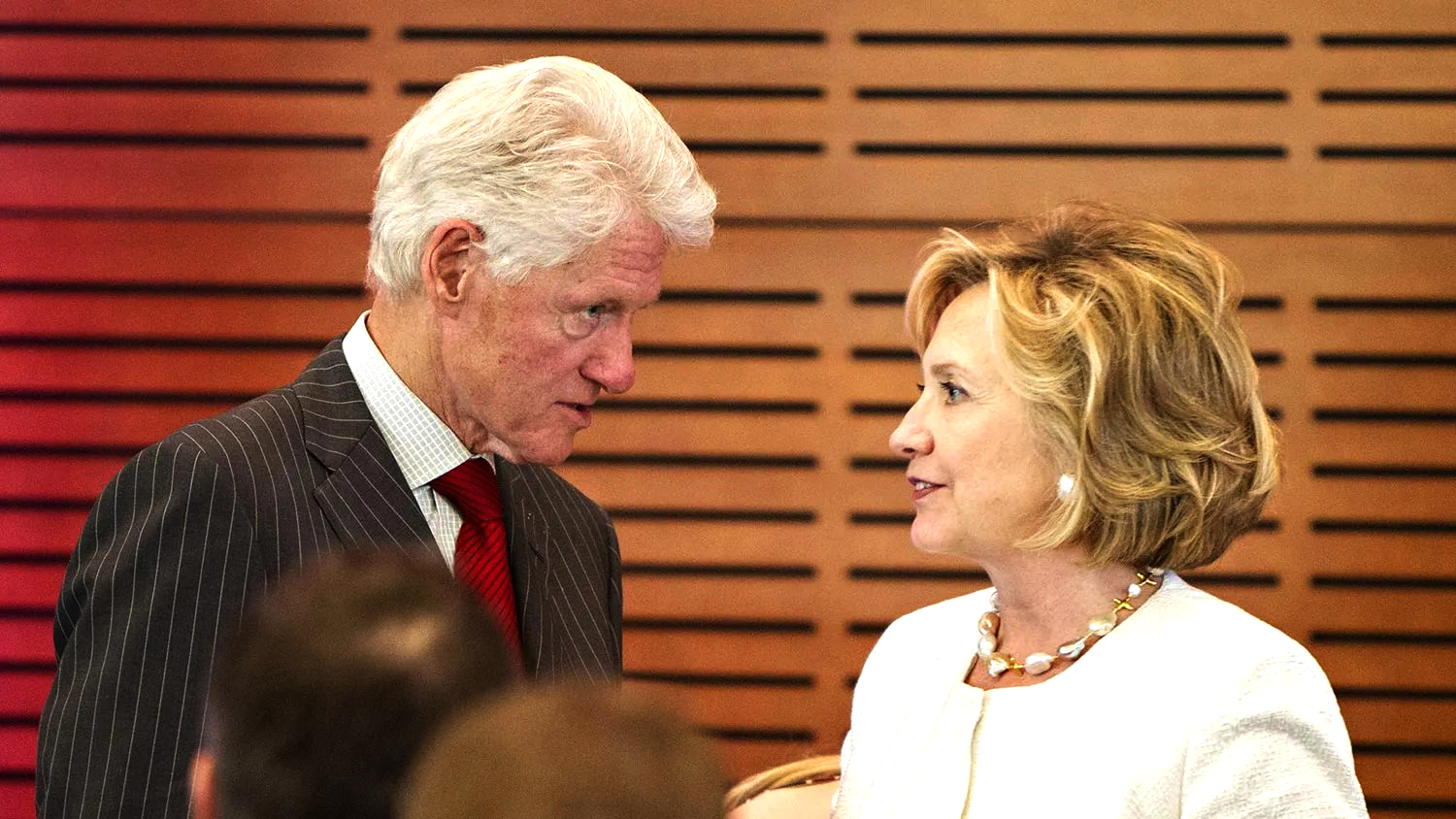
WASHINGTON: Former President Bill Clinton and former Secretary of State Hillary Clinton agreed late Monday to testify in a House investigation into convicted sex offender Jeffrey Epstein, though the Republican leading the probe said the agreement had not yet been finalized.
Rep. James Comer, chair of the House Oversight Committee, continued to press for criminal contempt of Congress charges against both Clintons Monday evening for defying a congressional subpoena. Attorneys for the Clintons emailed committee staff saying the pair would accept Comer’s demands and “will appear for depositions on mutually agreeable dates.”
The attorneys asked Comer, a Kentucky Republican, to halt contempt proceedings. Comer, however, said he was not immediately dropping the charges, which could carry the threat of substantial fines and even incarceration if approved by the House and prosecuted by the Department of Justice.
“We don’t have anything in writing,” Comer told reporters, adding that while he was open to accepting the Clintons’ offer, “it depends on what they say.”
The last-minute negotiations came as Republican leaders were advancing the contempt resolution through the House Rules Committee — the final hurdle before a floor vote. It marked a potentially historic moment for Congress, as it could be the first time a former president is held in contempt and faces the prospect of prison time.
As talks continued, the House Rules Committee postponed advancing the contempt resolutions. Earlier Monday, Comer rejected an offer from the Clintons’ attorneys for Bill Clinton to conduct a transcribed interview and for Hillary Clinton to submit a sworn declaration. He insisted both must sit for sworn depositions to comply with the subpoenas.
A letter from the committee to the Clintons’ attorneys indicated they had offered Bill Clinton a four-hour transcribed interview on “matters related to the investigations and prosecutions of Jeffrey Epstein” and a sworn declaration from Hillary Clinton.
“The Clintons do not get to dictate the terms of lawful subpoenas,” Comer said.
The former president and secretary of state had resisted the subpoenas for months after the Oversight Committee issued them in August as part of its Epstein investigation. Their attorneys had challenged the validity of the subpoenas. However, as Comer escalated the matter toward contempt proceedings, the Clintons moved toward a compromise.
The Republican-controlled Oversight Committee advanced criminal contempt charges last month. Nine of the committee’s 21 Democrats joined Republicans in supporting the charges against Bill Clinton, citing the need for full transparency in the Epstein investigation. Three Democrats also supported advancing the charges against Hillary Clinton.
Bill Clinton’s past relationship with Epstein has resurfaced as Republicans push for a broader reckoning over Epstein, who died by suicide in a New York jail cell in 2019 while facing sex trafficking charges. Clinton, like several other prominent figures, had a documented association with Epstein in the late 1990s and early 2000s, though he has not been accused of wrongdoing.
The Clintons have strongly criticized Comer’s approach, accusing him of politicizing the investigation while failing to hold the Trump administration accountable for delays in releasing Department of Justice files related to Epstein.
“They negotiated in good faith. You did not,” said Angel Ureña, a spokesperson for the Clintons, responding to Comer’s threats. “They told you under oath what they know, but you don’t care.”
Despite the pushback, the prospect of a contempt vote raised the possibility of Congress invoking one of its harshest penalties against a former president — something unprecedented in U.S. history. Traditionally, Congress has shown deference to former presidents, and none has ever been compelled to testify, though some have done so voluntarily.
House Democratic Leader Hakeem Jeffries said earlier Monday that his caucus would discuss the contempt resolutions later in the week but stopped short of committing to whipping votes against them.
Jeffries said he was a “hard no” on contempt and accused Comer of pursuing political retribution rather than seeking the delayed release of Epstein-related case files.
“They don’t want a serious interview, they want a charade,” Jeffries said.
-Stephen Shepardson