



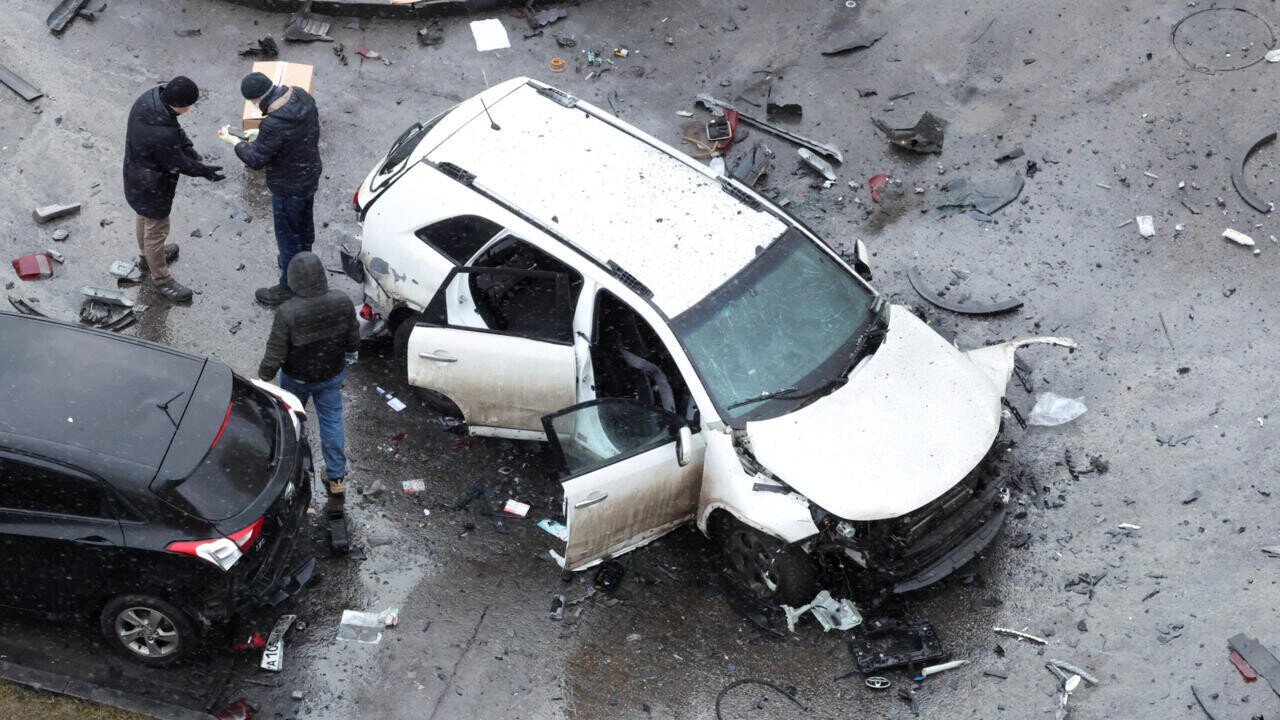
MOSCOW: A powerful car bomb killed a senior Russian military officer in Moscow on Monday, marking the third assassination of a high-ranking Russian general in just over a year, as investigators indicated that Ukrainian intelligence may be behind the attack.
Russia’s Investigative Committee confirmed that Lt. Gen. Fanil Sarvarov (56), head of the Operational Training Directorate of the Russian Armed Forces’ General Staff, succumbed to his injuries after the explosion. The blast occurred near a residential area, raising renewed concerns about internal security in the Russian capital amid the ongoing Ukraine war.
Svetlana Petrenko, spokesperson for the Investigative Committee, said investigators are pursuing multiple lines of inquiry, including the possibility that the killing was “orchestrated by Ukrainian intelligence services.” She added that forensic teams are examining the explosive device, surveillance footage, and communication records linked to the incident.
Sarvarov was a veteran officer who had fought in Chechnya and later played an operational role in Russia’s military campaign in Syria, making him one of the most senior figures targeted inside Russia since the start of the Ukraine conflict.
Kremlin spokesperson Dmitry Peskov confirmed that President Vladimir Putin was immediately briefed on the killing. While stopping short of assigning formal blame, Peskov described the attack as a serious escalation and said Russian security agencies had been instructed to strengthen counter-terror measures.
Since Moscow launched its military operation in Ukraine nearly four years ago, Russian authorities have accused Kyiv of involvement in several assassinations of military officers, intelligence officials, and pro-Kremlin figures on Russian soil. Ukraine has acknowledged responsibility for some past attacks but has not commented on Sarvarov’s killing.
The incident underscores the deepening shadow war between Russia and Ukraine, where covert operations, targeted killings, and sabotage have increasingly complemented battlefield confrontations. Analysts say the attack could prompt tighter security protocols for senior officials and intensify Russia’s internal counterintelligence operations.
-WNN Desk, Russia