



DHAKA: Bangladesh’s first national election since the 2024 uprising that forced Sheikh Hasina from power has delivered a projected parliamentary majority to the Bangladesh Nationalist Party (BNP), positioning it to form the next government while simultaneously plunging the country into a new legitimacy battle that could shape its political trajectory for years.
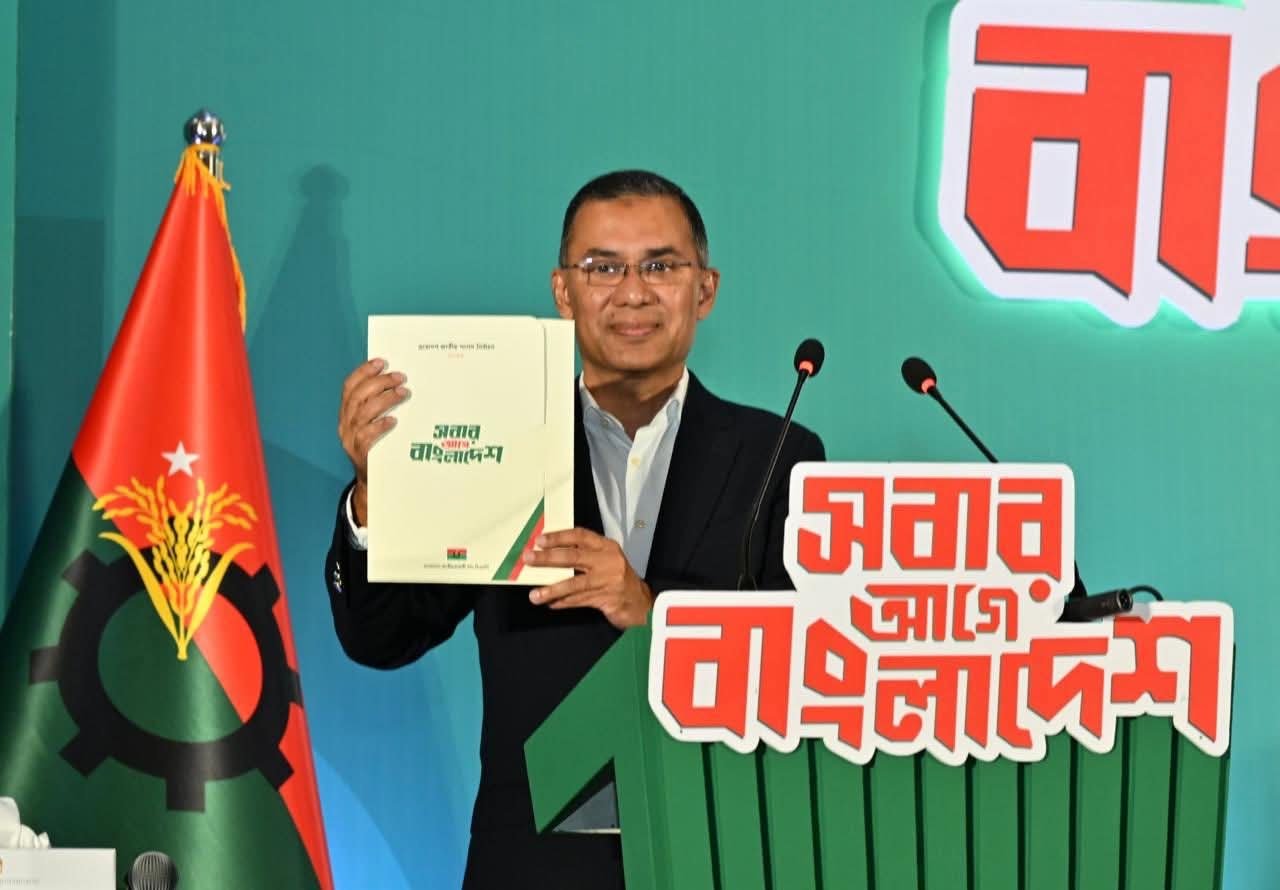
Preliminary projections indicate the BNP, led by Tarique Rahman, son of former Prime Minister Khaleda Zia has secured enough seats in the 300-member parliament to form a government, marking a dramatic shift in power after more than a decade of Awami League dominance. The vote, conducted under the interim administration of Nobel laureate Muhammad Yunus, was framed by authorities as a democratic reset following months of upheaval and the youth-led protests that drove Hasina into exile in India. Yet the election’s credibility is already being contested, with the Awami League rejecting the process outright and calling for its annulment.
The political stakes extend far beyond a routine transfer of power. Bangladesh is attempting to rebuild its democratic framework after a turbulent period marked by mass protests, political violence, attacks on minority communities and an erosion of institutional trust. The new election was intended to signal a return to electoral legitimacy and constitutional normalcy. Instead, it has exposed the fragility of that transition.
The Awami League’s exclusion from the ballot has become the central fault line. Still one of the country’s largest political forces, the party was barred from contesting, transforming what might have been a competitive national vote into a structurally incomplete contest. From exile, Sheikh Hasina denounced the election as a “carefully planned farce” organised by what she described as an “illegal and unconstitutional” interim administration. She thanked supporters including women and minority communities for boycotting the vote and argued that low turnout and empty polling stations in many areas demonstrated public rejection of the process.
Hasina’s statement went further, alleging widespread intimidation, arrests of party activists and a climate of fear targeting Awami League supporters and minority voters. She claimed irregularities including vote buying, ballot stamping and what she described as suspicious increases in voter lists in some constituencies. The Awami League has demanded the cancellation of what it called a “voterless” election, the resignation of the interim government, the release of political detainees and fresh polls under a neutral caretaker framework that includes all parties.
These accusations stand in stark contrast to the narrative advanced by interim authorities and election monitors, who pointed to largely peaceful voting conditions, the presence of international observers and active participation by multiple parties as indicators of procedural credibility. The BNP has framed its projected victory as a mandate for democratic restoration, institutional rebuilding and economic recovery after years of political stagnation and global economic pressure.
The competing narratives underscore a deeper structural dilemma. Bangladesh’s political system has long revolved around an intensely polarized rivalry between the Awami League and the BNP. Any transition that sidelines one of these pillars risks creating a legitimacy deficit that no electoral arithmetic can easily resolve. A BNP-led government may command a parliamentary majority, but without the participation or acquiescence of the Awami League and its support base, political stability will remain uncertain.
Compounding the complexity is the renewed prominence of Islamist political forces. An alliance led by Jamaat-e-Islami emerged as the principal challenger to the BNP, reflecting the shifting ideological balance in the post-Hasina landscape. Their growing influence has generated concern among secular constituencies and minority communities about the future of Bangladesh’s social compact and legal protections, particularly in a period already marked by sporadic communal tensions and attacks on vulnerable groups.
At the same time, voters were asked to endorse a package of sweeping constitutional reforms that could reshape the country’s governance structure, including proposals for new constitutional bodies and a potential transition to a bicameral legislature. If implemented, these changes would alter the institutional architecture of power at a moment when trust in political institutions remains deeply contested. For the incoming government, constitutional reform could become either a mechanism for inclusive renewal or another arena of political confrontation.
The broader geopolitical implications are also significant. Bangladesh occupies a strategic position in South Asia’s evolving balance of power, with India, China, the United States and Gulf states all maintaining economic and security interests in the country. Political instability or contested legitimacy in Dhaka risks complicating regional alignments and investment flows at a time when Bangladesh’s export-driven economy is already under strain.
Ultimately, the election has delivered a decisive shift in parliamentary power but not a settled political order. Whether it marks the beginning of democratic reconstruction or the start of another cycle of confrontation will depend on how the new leadership addresses questions of inclusion, legitimacy and institutional credibility. Bangladesh has entered a new political phase, but the foundations of that transition remain contested and fragile.
-WNN, Dhaka
–