

ADVERTISEMENT
  • About
  • Advertise
  • Privacy & Policy
  • Contact
thewnn.com
ADVERTISEMENT
  • Home
  • Politics
  • Business
  • Climate & Energy
  • WNN Exclusive
  • Others
    • AFRICA
    • EDUCATION
    • Entertainment
    • Environment
    • Europe
    • Finance
    • Health
    • Peace & Conflict
    • Religion & Faith
  • WNN AFRICA
  • en
    • ar
    • en
    • fr
    • fa
E-Magazine
No Result
View All Result
  • Home
  • Politics
  • Business
  • Climate & Energy
  • WNN Exclusive
  • Others
    • AFRICA
    • EDUCATION
    • Entertainment
    • Environment
    • Europe
    • Finance
    • Health
    • Peace & Conflict
    • Religion & Faith
  • WNN AFRICA
  • en
    • ar
    • en
    • fr
    • fa
No Result
View All Result
thewnn.com
No Result
View All Result
ADVERTISEMENT
ADVERTISEMENT
Home Politics

RIC Redux: Can diplomacy bring the two sides of the Himalayas together?

Share on FacebookShare on Twitter
ADVERTISEMENT

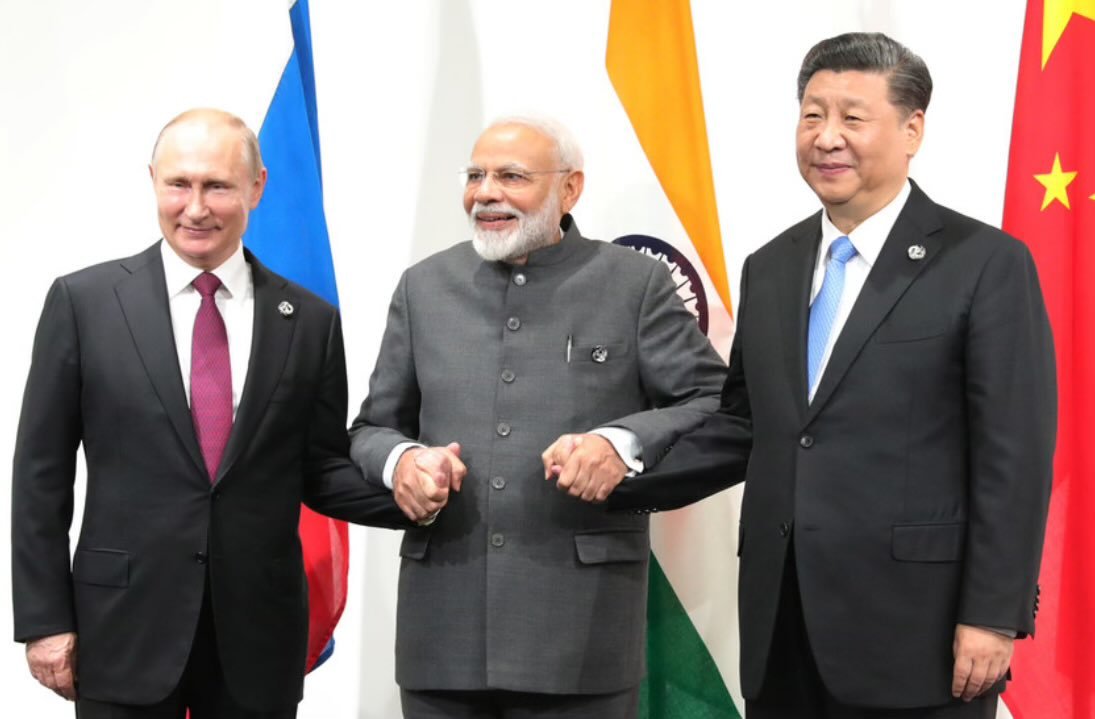
In 2025, diplomacy has become a complicated game of strategic restraint and carefully planned vagueness. This is most clear in the recent effort to bring back the Russia-India-China (RIC) trilateral group, which was formed in the 1990s after the Cold War but was put on hold because of border disputes and changing alignments.

Russia is trying to change its image as a Eurasian bridge-builder because the Ukraine conflict and the Western sanctions that followed have made it less powerful in the world. Russian Foreign Minister Sergey Lavrov said at a big security conference in Perm in early July, “The time has come for the revival of this RIC troika… India and China have come to an agreement on how to ease the situation on the border.” Moscow sees RIC as more than just a way to show off its diplomatic skills; it also sees it as a way to balance out Western coalitions by using projects like the International North-South Transport Corridor (INSTC), increasing trade in national currencies, and making joint digital payment systems to get around SWIFT.

China quickly accepted the Russian offer because it wanted to strengthen its presence in Eurasia as competition from the U.S. grew. Lin Jian, a spokesperson for the Chinese Foreign Ministry, said again that China is committed to working with Russia and India. He said, “Cooperation between China, Russia, and India not only benefits all three countries, but it also helps maintain peace, security, and development.” This fits with the burgeoning “Dragon-Bear” cooperation, which is worth more than $240 billion and is based on common goals of multipolarity, digital finance integration, and regional connectivity through projects like the Belt and Road and INSTC.

ADVERTISEMENT

But India’s position is still measured. Randhir Jaiswal, a spokeswoman for the Ministry of External Affairs (MEA), recently called RIC a “consultative forum” and suggested that its reactivation might be looked into “at a mutually convenient time.” India is taking this careful approach because it is still having border problems with China and wants to stay strategically independent by balancing its partnerships with Russia and the West without getting stuck in inflexible blocs.

ADVERTISEMENT

There are still problems along the Line of Actual Control (LAC). General Upendra Dwivedi, the head of the Indian Army, said in a press conference in early July that there is still “a degree of standoff” in the eastern Ladakh area and that force deployments will not be cut back. Defence Minister Rajnath Singh backed up this military stance with diplomacy by stressing the need for a “structured roadmap” and real confidence-building measures from China at the SCO Defence Ministers’ Meeting in Astana, Kazakhstan.

Advertisement. Scroll to continue reading.

India’s geopolitical math is hard to figure out. India has a long-standing defense and energy connection with Russia, and Rosneft and ONGC are still working together in the Sakhalin-I oil resources. India is also a key member of the Quad and has struck significant tech and semiconductor ties with the U.S. and Japan. India doesn’t like coercive extraterritorial measures, no matter where they come from, as shown by the MEA’s July 18 criticism of EU unilateral sanctions that targeted the Nayara Energy refinery in Gujarat, which was built by Russia.

Analysts in Moscow are hopeful. They think RIC can help stabilize Eurasia by promoting dialogue between civilizations, fighting the dominance of the dollar, and strengthening BRICS+ structures. Kanwal Sibal, a former Indian Foreign Secretary, had a more realistic view: “The RIC format has potential, but only if China stops being so aggressive toward India.” Shivshankar Menon, a former National Security Advisor, said the same thing at a recent think-tank gathering in Singapore: “We can’t talk about trilateral harmony when one side keeps attacking us on our borders.”

Also, new research from the Observer Research Foundation (ORF) and Carnegie India shows that the lack of trust between India and China has grown since 2020, not shrunk. Even after more than 21 rounds of talks at the Corps Commander level, problems like Depsang and Demchok are still not solved. Satellite pictures from early July show that the PLA is still building up its infrastructure near Arunachal Pradesh.

ADVERTISEMENT

In short, RIC is now a triangle with sides of different lengths. Russia is the fulcrum pushing hard, China is the driver with defined interests, and India is still the reluctant partner watching from the outside.

So, the Himalayan divide is still both real and metaphorical. Trilateral diplomacy will continue in neutral until Beijing makes meaningful changes, not just nice words. “RIC is an interesting dream, but only action can build bridges, not dreams.”

– Dr. Shahid Siddiqui; Follow via X @shahidsiddiqui

Tags: BRICSChinaDiplomacyEUEurasiaIndiaMoscowNewsPLARICRussiaRussia-India-ChinaShahidshahid siddiquiShhaidWNN
ADVERTISEMENT
Previous Post

Israel and Syria Agree Ceasefire as Israel Allows Syrian Troops Limited Access to Sweida

Next Post

Congo, M23 Rebels Pledge in Qatar to Reach Peace Deal Next Month

Next Post
Congo, M23 Rebels Pledge in Qatar to Reach Peace Deal Next Month

Congo, M23 Rebels Pledge in Qatar to Reach Peace Deal Next Month

7.4 Magnitude Quake Strikes Off Russia’s Kamchatka, Tsunami Alerts Lifted

7.4 Magnitude Quake Strikes Off Russia’s Kamchatka, Tsunami Alerts Lifted

Leave a Reply

Your email address will not be published. Required fields are marked *

Stay Connected test

  • 23.9k Followers
  • 99 Subscribers
  • Trending
  • Comments
  • Latest
Trump Confirms Maduro Arrest, Signals U.S. Control in Venezuela

Trump Confirms Maduro Arrest, Signals U.S. Control in Venezuela

January 3, 2026
Blueprints from the Past: Rethinking India’s Tourism with Tradition at Its Heart

Blueprints from the Past: Rethinking India’s Tourism with Tradition at Its Heart

August 21, 2025
After Maduro: The High Cost of a Violent Shortcut

After Maduro: The High Cost of a Violent Shortcut

January 4, 2026
“Sudan’s War Is Not Civil, It’s a Proxy Battle”, Envoy Accuses UAE of Arming RSF Militia

“Sudan’s War Is Not Civil, It’s a Proxy Battle”, Envoy Accuses UAE of Arming RSF Militia

November 3, 2025
WNN Launches to Deliver Real News, Real Time, Worldwide

WNN Launches to Deliver Real News, Real Time, Worldwide

1

Shadow Tactics: Blades of the Shogun Review

1

Intel Core i7-7700K ‘Kaby Lake’ review

1

Evil Geniues, Team Liquid, and Alliance have finalized their Dota 2 rosters

1
“India Must Bridge Law and Power in Palestine”

“India Must Bridge Law and Power in Palestine”

January 30, 2026
Tourism in Cuba Collapses Amid Rising U.S. Tensions and Energy Shortages

Tourism in Cuba Collapses Amid Rising U.S. Tensions and Energy Shortages

January 28, 2026
A Post-American Trade Moment: India – Europe Reshapes Global Economic Leadership

A Post-American Trade Moment: India – Europe Reshapes Global Economic Leadership

January 27, 2026
U.S. Says It Is “Open for Business” with Iran as Military Pressure Mounts

U.S. Says It Is “Open for Business” with Iran as Military Pressure Mounts

January 27, 2026

Recent News

“India Must Bridge Law and Power in Palestine”

“India Must Bridge Law and Power in Palestine”

January 30, 2026
Tourism in Cuba Collapses Amid Rising U.S. Tensions and Energy Shortages

Tourism in Cuba Collapses Amid Rising U.S. Tensions and Energy Shortages

January 28, 2026
A Post-American Trade Moment: India – Europe Reshapes Global Economic Leadership

A Post-American Trade Moment: India – Europe Reshapes Global Economic Leadership

January 27, 2026
U.S. Says It Is “Open for Business” with Iran as Military Pressure Mounts

U.S. Says It Is “Open for Business” with Iran as Military Pressure Mounts

January 27, 2026
ADVERTISEMENT
thewnn.com

WNN- (World Affairs News Network) is a GLOBAL news platform delivering fast, accurate, and deeply contextual reporting from every corner of the world. Built on the pillars of clarity, credibility, and context in collaboration with Wakanda Network (Africa) and Sadbhawna Today - India's National Daily Hindi Newspaper, WNN brings you real news as it unfolds, unfiltered, uncompromised, and globally relevant.

Follow Us

Email ID: editor@thewnn.com

Tel. No.: +1 (929) 607-9858

Subscribe on YouTube

Join Us on Facebook

WNN’s Hindi Partner

  • About
  • Advertise
  • Privacy & Policy
  • Contact

© 2025 thewnn.

Welcome Back!

Login to your account below

Forgotten Password?

Retrieve your password

Please enter your username or email address to reset your password.

Log In

Add New Playlist

No Result
View All Result
  • Home
  • Politics
  • Business
  • Climate & Energy
  • WNN Exclusive
  • Others
    • AFRICA
    • EDUCATION
    • Entertainment
    • Environment
    • Europe
    • Finance
    • Health
    • Peace & Conflict
    • Religion & Faith
  • WNN AFRICA

© 2025 thewnn.