NEW DELHI, India: For decades, Seychelles existed on the margins of geopolitical imagination an idyllic African island state defined more by tourism brochures than by strategic calculations. Today, that perception is rapidly dissolving. As global trade routes shift, maritime competition intensifies, and Africa’s oceanic frontiers gain prominence, Seychelles has emerged as a critical node in the evolving geopolitics of the western Indian Ocean.
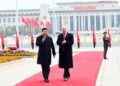
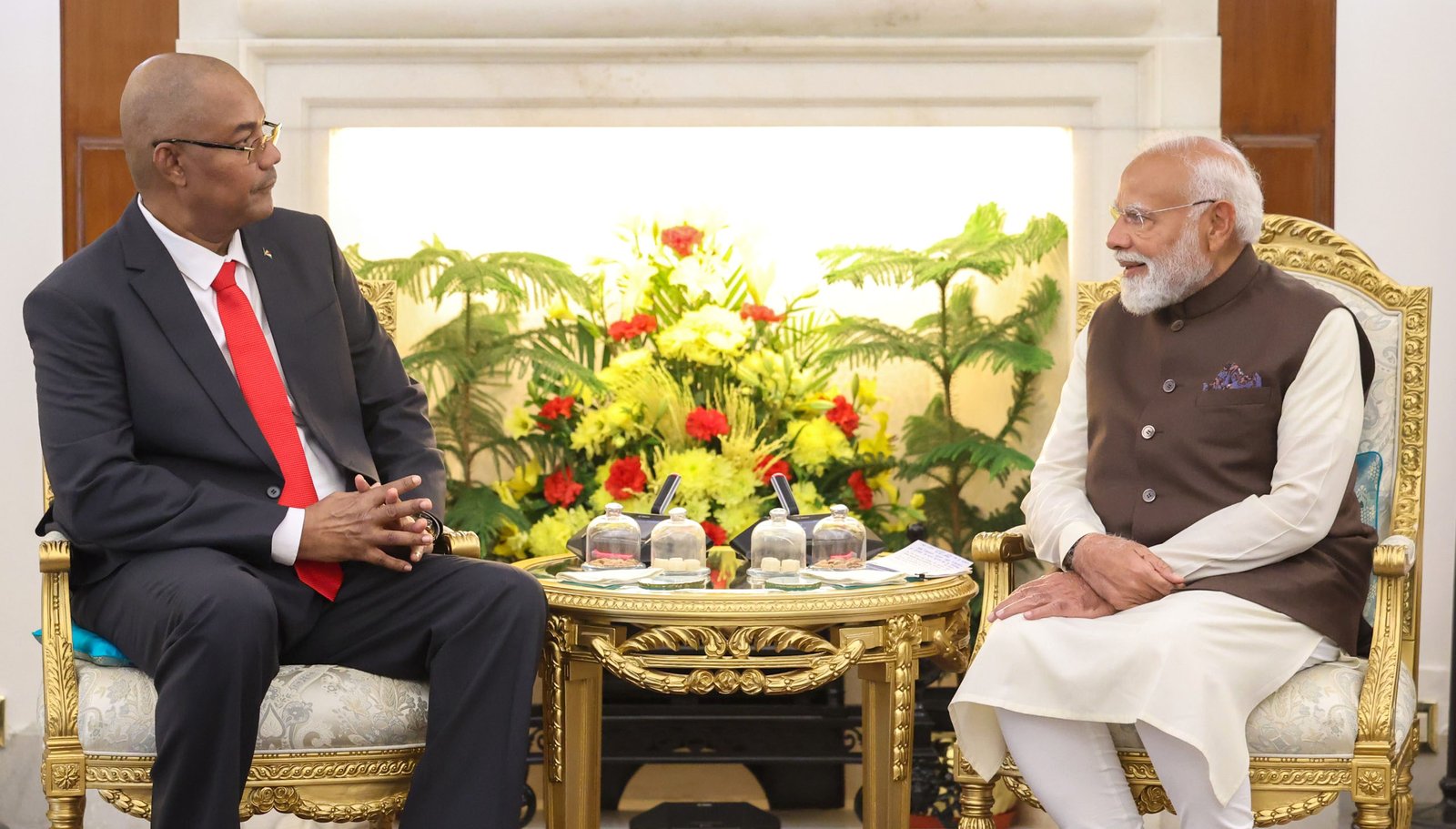
President Patrick Herminie’s recent state visit to India and New Delhi’s announcement of a $175 million economic package signal more than bilateral goodwill. They represent a recalibration of power, partnership, and influence in and around Africa’s maritime domain. Seychelles is no longer a peripheral actor. It is increasingly central to how external powers engage Africa’s oceanic geography and how African states themselves navigate a complex strategic environment.
At stake is not simply the future of one island nation, but the broader trajectory of Africa’s engagement with global power competition across the Indian Ocean.
Africa’s Maritime Frontier Comes into Focus
Africa’s strategic geography has historically been framed in continental terms land borders, mineral resources, and regional conflicts. Yet the continent’s maritime dimension is rapidly gaining significance. From the Gulf of Guinea to the Red Sea and down to the Mozambique Channel, Africa’s surrounding waters are becoming arenas of economic opportunity and geopolitical rivalry.
Seychelles sits at the centre of this emerging maritime frontier. Located northeast of Madagascar along key sea lanes linking Asia, Africa, and Europe, the archipelago occupies a position that allows it to influence the movement of energy supplies, commercial shipping, and naval deployments across the western Indian Ocean. For a continent seeking greater control over its maritime resources and trade routes, Seychelles represents both a gateway and a guardian.
However, this strategic relevance also exposes the country to new pressures. Maritime insecurity including illegal fishing, piracy, trafficking, and environmental degradation—continues to threaten the stability of the region. Meanwhile, external powers are increasingly seeking logistical access, security partnerships, and economic influence across African coastal and island states.
Seychelles therefore faces a delicate balancing act: leveraging its location for economic and diplomatic gain while avoiding entanglement in great-power rivalry that could compromise its sovereignty.
India’s Engagement: Partnership or Strategic Projection?
India’s $175 million economic package for Seychelles illustrates how external powers are recalibrating their Africa strategies through maritime partnerships. The blended financing—combining a $125 million line of credit with $50 million in grants targets infrastructure development, capacity building, healthcare cooperation, and maritime security.
On the surface, the package aligns with Seychelles’ development priorities. Investments in digital health systems, hospital infrastructure, and affordable medicines address immediate domestic needs. Discussions on port development, shipping cooperation, and sustainable marine industries support the country’s ambition to expand its blue economy and reduce dependence on tourism.
Yet the strategic logic behind India’s engagement is equally clear. By deepening ties with Seychelles, India strengthens its presence in the western Indian Ocean and reinforces its role as a security provider across Africa’s maritime periphery. The partnership enhances India’s ability to monitor key sea lanes, respond to maritime threats, and maintain influence in a region increasingly contested by multiple external actors.
For Seychelles, this relationship offers tangible benefits: capacity building, financial support, and enhanced maritime surveillance capabilities. But it also underscores a broader reality facing many African states external partnerships often carry implicit strategic expectations.
The challenge for Seychelles is to ensure that such cooperation remains aligned with national and regional interests rather than becoming a conduit for external power projection.
Seychelles as an African Strategic Actor
Too often, Seychelles is analysed primarily through an Indo-Pacific or Indian Ocean lens, overlooking its African identity and role. Yet as a member of the African Union and the Indian Ocean Commission, Seychelles is deeply embedded in African political and economic frameworks.
This positioning gives Seychelles an opportunity to shape Africa’s maritime agenda. Its vast exclusive economic zone (EEZ), rich marine biodiversity, and experience in ocean governance make it a natural leader in promoting the blue economy a development model that emphasises sustainable use of marine resources.
Illegal, unreported, and unregulated (IUU) fishing alone costs African economies billions annually, disproportionately affecting coastal and island states. Strengthening maritime surveillance and enforcement capabilities is therefore not merely a national priority for Seychelles but a continental one. Partnerships that enhance these capabilities contribute to broader African efforts to secure maritime resources and assert economic sovereignty.
At the same time, Seychelles’ engagement with external powers highlights the asymmetries inherent in Africa’s global relationships. Small states often rely on external financing and technical assistance to build infrastructure and security capacity. While such support is essential, it can also create dependencies that limit policy autonomy.
Seychelles’ strategy has been to diversify partnerships and maintain diplomatic flexibility—a pragmatic approach that reflects both opportunity and constraint.
Economic Fragility Beneath Strategic Importance
Despite its elevated geopolitical profile, Seychelles remains economically fragile. Its small population, limited domestic market, and reliance on tourism and fisheries create structural vulnerabilities. External shocks from pandemics to climate-related disasters can rapidly destabilise economic stability.
The COVID-19 pandemic demonstrated these risks, severely impacting tourism revenues and exposing the need for diversification. Efforts to expand the blue economy, digital services, and renewable energy sectors represent attempts to build resilience. External partnerships, including those with India, are expected to support this transition through investment, technology transfer, and capacity building.
However, economic diversification is easier envisioned than implemented. Infrastructure projects must be carefully managed to avoid debt burdens. Workforce development and institutional capacity must keep pace with new sectors. Without coherent long-term planning, external financing risks creating short-term growth without sustainable transformation.
For Seychelles, the central question is whether strategic relevance can be translated into durable economic resilience.
Great-Power Competition in African Waters
The western Indian Ocean is increasingly shaped by overlapping spheres of influence. Major powers view African island and coastal states as critical nodes in securing trade routes, projecting naval presence, and accessing maritime resources. Infrastructure investments, port agreements, and security partnerships have become instruments of geopolitical positioning.
Seychelles has so far managed to avoid overt alignment with any single bloc. Its multi-vector diplomacy engaging India, European partners, African institutions, and others—reflects an effort to maximise benefits while preserving autonomy. Yet maintaining this balance will become more difficult as competition intensifies.
Small states often face subtle pressures to align with competing strategic frameworks. Financial assistance and infrastructure investment may carry implicit expectations regarding access, influence, or policy alignment. For Seychelles, preserving strategic neutrality will require careful negotiation and transparent governance.
The broader African context is equally significant. As external powers deepen engagement across Africa’s maritime zones, the continent must develop collective frameworks to ensure that partnerships support African priorities rather than fragment regional cohesion.
Climate Vulnerability and Strategic Leverage
Climate change represents perhaps the most profound long-term challenge for Seychelles. Rising sea levels, coral reef degradation, and extreme weather threaten not only ecosystems but also economic stability. For a country whose identity and economy are intimately tied to the ocean, environmental sustainability is inseparable from national security.
Seychelles has sought to transform vulnerability into diplomatic leverage by positioning itself as a global advocate for ocean conservation and climate action. Its leadership in promoting the blue economy and marine protection initiatives enhances its international profile while attracting partnerships focused on sustainability.
Yet climate adaptation requires significant financial and technological resources. External partnerships that support renewable energy, climate-resilient infrastructure, and sustainable fisheries are essential. The risk, however, is that climate financing becomes entangled with geopolitical competition, complicating decision-making for small states.
Seychelles’ evolving role reflects a broader shift in Africa’s geopolitical landscape. As global attention turns toward maritime connectivity, energy routes, and ocean-based resources, Africa’s island and coastal states are gaining strategic prominence. The Indian Ocean, once seen primarily as a transit zone, is becoming a central arena of economic and security competition.
For Seychelles, this transformation presents both opportunity and uncertainty. Strategic relevance brings diplomatic leverage and development partnerships, but also exposure to external pressures and geopolitical volatility. The country’s ability to navigate this environment will depend on its capacity to balance partnerships, strengthen domestic resilience, and align external engagement with long-term national and African interests.
Ultimately, Seychelles embodies the paradox facing many small African states: limited in size yet significant in strategic value, vulnerable yet influential, dependent yet increasingly assertive. Its choices will shape not only its own future but also the evolving dynamics of Africa’s maritime century.
In a world where oceans are becoming the new theatres of power, Seychelles stands as a reminder that even the smallest African states can occupy pivotal positions in global geopolitics provided they can navigate the currents wisely.
– Dr. Shahid Siddiqui and Ed Osmond with Input from Agency