

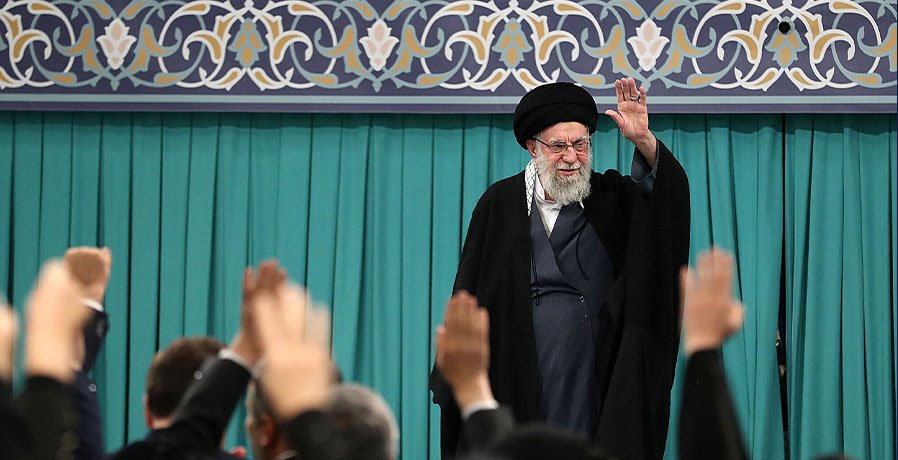
TEHRAN/ WASHINGTON: Iran’s Supreme Leader Ayatollah Ali Khamenei has sharply escalated tensions with Washington, accusing U.S. President Donald Trump of inciting the unrest that has engulfed the country and resulted in thousands of deaths. The confrontation reflects not only a domestic crisis but a widening geopolitical struggle between Tehran and the West.
The protests, which began on December 28 over worsening economic conditions, quickly evolved into direct challenges to clerical rule. Rights groups estimate more than 3,000 deaths and over 22,000 arrests, marking one of the bloodiest episodes of unrest in the Islamic Republic’s recent history.
By casting Trump as a central instigator, Iran’s leadership is shifting the narrative from internal dissent to foreign interference, a familiar strategy aimed at consolidating domestic authority and justifying sweeping security measures.
Trump has repeatedly warned Iran against executing protesters, threatening “very strong action.” In a recent social media post, he thanked Iranian leaders for allegedly halting mass hangings, a claim Tehran denied. He has also openly called for “new leadership in Iran” and the end of Khamenei’s decades-long rule, reinforcing Tehran’s perception of an externally driven campaign for regime change.
Khamenei responded by saying Iran would avoid war but would not allow “domestic or international criminals” to go unpunished, signaling that repression at home will continue even as Tehran seeks to avoid a direct military confrontation abroad.
Iranian authorities have labeled detainees as “mohareb”, those who wage war against God, a charge carrying the death penalty. This framing casts protesters as enemies of the state and religion, enabling the government to pursue severe punishments while presenting its actions as legally and morally justified.
The Human Rights Activists News Agency (HRANA) has verified 3,090 deaths, most of them protesters. While Iranian officials have not independently confirmed the figure, Khamenei has acknowledged “several thousand deaths,” implicitly validating the scale of the crackdown.
At the same time, widespread internet blackouts and information controls have restricted independent reporting, reinforcing the state’s dominance over public narratives during the crisis.
Tehran has accused foreign-linked opposition networks of orchestrating the unrest, including individuals allegedly connected to Reza Pahlavi, the exiled son of Iran’s last shah. Pahlavi has positioned himself as a potential transitional leader and has advocated restoring diplomatic ties with Israel, further intensifying regime suspicions of foreign-backed destabilization.
Israeli officials have acknowledged the presence of operatives inside Iran aimed at weakening Tehran’s capabilities, though they deny pursuing direct regime change. Such disclosures nevertheless reinforce Iran’s claims of external sabotage and blur the line between internal dissent and international confrontation.
What began as protests over economic hardship has now evolved into a multi-layered crisis combining domestic legitimacy challenges, human rights concerns, and strategic rivalry with the United States and its allies. For Tehran, the priority remains regime survival through repression, narrative control, and deterrence. For Washington, rhetorical escalation and symbolic pressure continue without a clear pathway to political change inside Iran.
The result is a dangerous stalemate in which internal instability is now embedded within a broader geopolitical struggle, raising the risk that future unrest will be met not only with internal force but also with heightened international confrontation.
-Lewis Craft
–
READ THE FULL E-MAGAZINE | WorldAffairs: For Decision-Makers Who Need More Than Headlines