



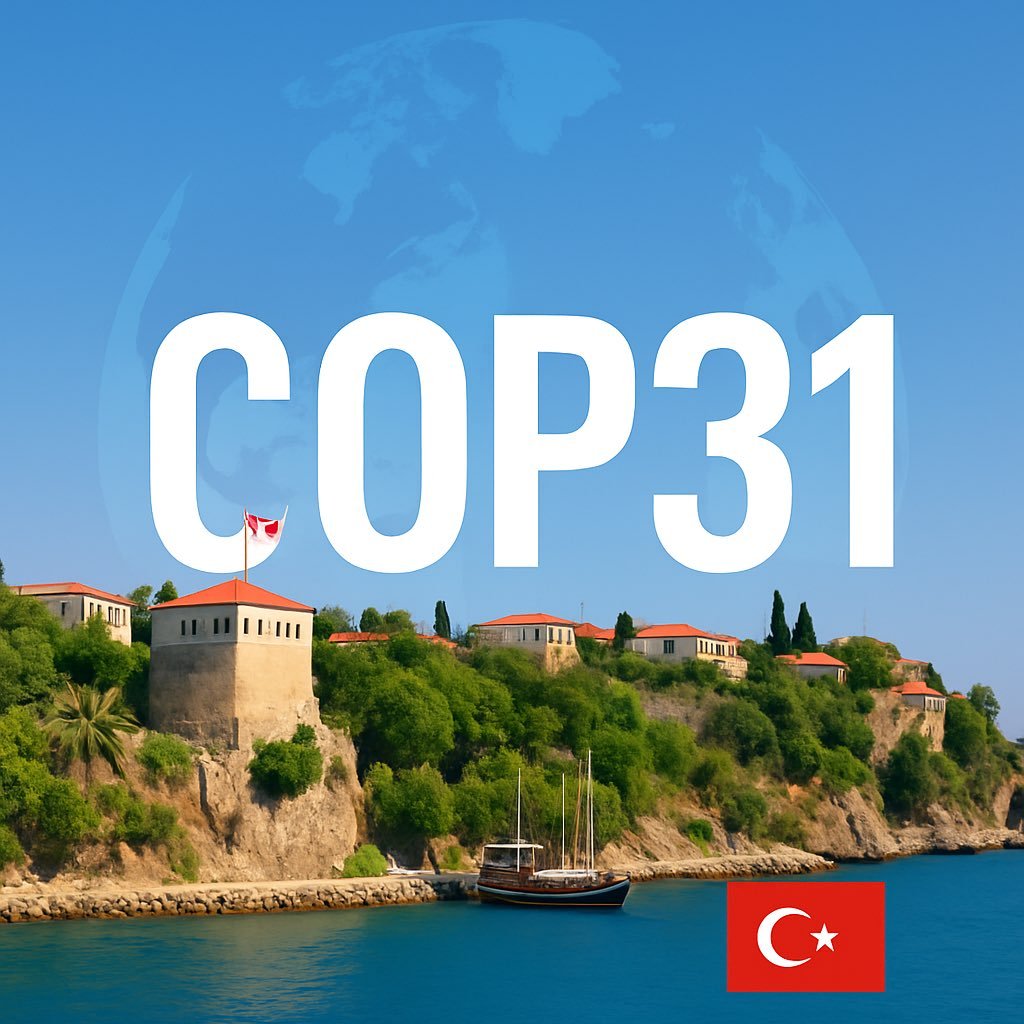
BELEM, Brazil: Turkey will host next year’s UN climate summit while Australia will lead the conference’s government negotiations, under a compromise agreement emerging from talks in Brazil, Australian Prime Minister Anthony Albanese said on Thursday.
The annual COP gatherings are the world’s primary forum for advancing global climate action. The deal would end a prolonged stand-off between Australia and Turkey, both of which bid in 2022 to stage COP31 and had refused to withdraw their candidacies.
Under the compromise, Turkey would host COP31 as summit president in Antalya, with a pre-COP event held in the Pacific, while Australia would preside over the negotiations. “What we’ve come up with is a big win for both Australia and Turkey,” Albanese told ABC Radio.
The two countries now have just one year to prepare for a summit that typically attracts tens of thousands of participants and requires months of intense diplomacy to build consensus on climate goals.
“There’s a little way to go in these discussions,” Australia’s Climate Change and Energy Minister Chris Bowen said at COP30 in Belem, adding that the agreement would meet Australia’s core objectives. “It would be great if Australia could have it all. But we can’t have it all,” he said. “It was important to strike an agreement.”
Bowen said the arrangement envisages him leading COP negotiations: “I would have all the powers of COP presidency to manage the negotiations, appoint co-facilitators, prepare draft text, and issue the cover decision.”
Turkey’s government did not immediately comment.
Climate diplomacy experts broadly welcomed the deal. “It is a good outcome,” said David Dutton, research director at the Lowy Institute and formerly Australia’s assistant secretary of climate diplomacy. “It alleviates some of the cost and burden of organising the COP while creating opportunities for Australia and the Pacific to do something with it.”
Australia had promoted its bid as a “Pacific COP,” designed in partnership with vulnerable island states and centred on their exposure to rising sea levels. Canberra says it has already spent A$7 million ($4.5 million) preparing to host, confident that wide international support would help it defeat Turkey’s bid.
Turkey, meanwhile, has framed its hosting plans around its identity as an emerging economy, vowing to foreground solidarity between rich and poor countries and offer a more globally representative summit.
Earlier this week, Albanese dismissed the option of co-hosting—an idea Turkey had pushed—citing UN rules. Ankara said the two sides had previously explored joint models in September.
A source familiar with the talks said confusion remained over how responsibilities would be shared, particularly regarding negotiation authority, given UN procedures that generally assign leadership to a single country. The person requested anonymity as they were not authorised to speak publicly.
News of the compromise deal was first reported by Bloomberg.
⁃ Renju Hobson