


JOHANNESBURG: There are moments in diplomatic history when procedural rebellion becomes moral imperative. The G20 Summit in Johannesburg this weekend was one of them. When South African President Cyril Ramaphosa declared that the summit’s climate and development declaration “can’t be renegotiated,” he wasn’t just defending a policy document. He was asserting that the world’s major economies cannot be held hostage by a single nation’s political theatrics, no matter how powerful.
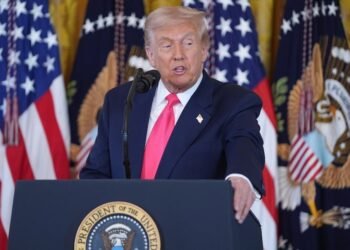
The Trump administration’s boycott of the summit ostensibly over discredited claims about South Africa’s treatment of white farmers provided the perfect test case. Could meaningful multilateral action proceed without American participation? The answer proved to be a resounding yes, fundamentally altering the calculus of international cooperation. For too long, the G20’s consensus requirement has functioned as a de facto American veto over global progress. While the forum represents 80% of global GDP and two-thirds of the world’s population, a single member’s obstruction could paralyze action on humanity’s most pressing challenges.
The Johannesburg declaration adopted despite U.S. opposition used language “long disliked by the U.S. administration: stressing the seriousness of climate change and the need to better adapt to it, praising ambitious targets to boost renewable energy and noting the punishing levels of debt service suffered by poor countries.” This wasn’t diplomatic courtesy; it was climate reality. While Trump rejects the scientific consensus on human-caused global warming, the rest of the world faces escalating extreme weather events, rising sea levels, and urgent adaptation needs. The climate crisis cannot wait for American political cycles.
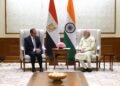
Amidst this diplomatic rebellion, Prime Minister Narendra Modi’s presence carried particular significance. His departure statement before arriving in Johannesburg articulated a vision that would echo through the summit’s proceedings: “India feels the responsibility to take forward the G20 process and put forth the issues being faced by the developing countries.” Modi’s philosophical framework, “Vasudhaiva Kutumbakam” and “One earth, One Family, One future”, transcended mere diplomatic rhetoric. It positioned developing nations not as supplicants seeking charity, but as equal stakeholders in humanity’s future.
When Modi spoke of taking “forward the G20 process and the issues being faced by the developing countries,” he was articulating collective responsibility for shared planetary destiny. This framing proved crucial as the summit addressed “disaster resilience, debt sustainability for low-income countries, and mobilizing finance for energy transition” issues that are literally matters of life and death for billions. When monsoons fail in India, hundreds of millions face food insecurity. When debt service consumes half a nation’s budget, schools and hospitals close. When green energy remains inaccessible to poor countries, they have no choice but to burn coal despite climate consequences.
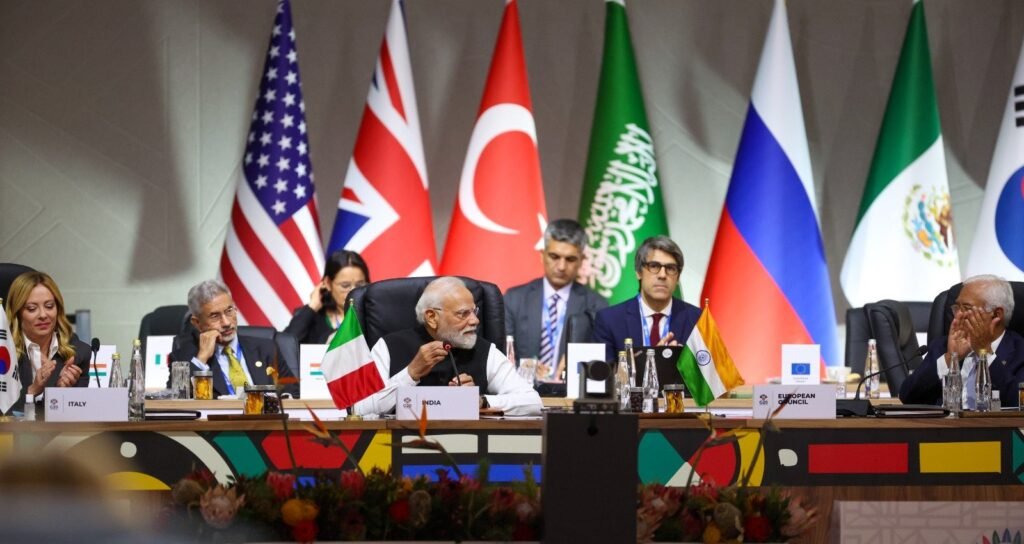
India’s role at this summit was distinctive. Modi came not as a supplicant or declining power seeking relevance, but as a leader whose nation had successfully advocated for the African Union to become a permanent G20 member during India’s 2023 presidency an achievement that made Johannesburg’s historic first African summit possible. “India certainly is a leader and has played a leadership role when it comes to the global south,” observers noted as Modi engaged with world leaders. His statement on taking “forward the G20 process and the issues being faced by the developing countries” went beyond India’s national interest; it articulated a collective responsibility.
The summit wasn’t without tensions. Argentina, under far-right President Javier Milei a close Trump ally withdrew from negotiations at the last minute, citing concerns over how the document addressed Middle Eastern conflicts. At the last minute, Argentina quit the negotiations right before the envoys were about to adopt the draft text, with Foreign Minister Pablo Quirno explaining that Argentina was concerned about how the document referred to geopolitical issues, “specifically it addresses the longstanding Middle East conflict in a manner that fails to capture its full complexity.”
EU Commissioner Ursula von der Leyen warned against “the weaponisation of dependencies,” a veiled reference to China’s rare earth export controls. These fractures revealed how bilateral relationships increasingly trump multilateral commitments. Yet these complications only underscore why India’s unifying narrative matters. When geopolitical rivalries threaten to tear apart global cooperation, a framework rooted in common humanity becomes not luxury but necessity.
Even procedural details carried symbolic weight. When the U.S. offered to send a chargé d’affaires for the G20 handover, South Africa refused. “The president will not hand over to a junior embassy official the presidency of the G20. It’s a breach of protocol that is not going to be accommodated,” spokesperson Vincent Magwenya declared. This insistence on proper protocol asserted that respect for institutions matters as much as economic power. Ramaphosa’s contrast with his May White House visit—where he endured Trump repeating false claims about white farmer genocide while brushing aside corrections was stark. The Johannesburg summit offered a chance to reclaim dignity for both himself and his country. He seized it decisively.’
The Revolution in “Sufficient Consensus”
Perhaps the most revolutionary phrase to emerge from Johannesburg was “sufficient consensus”, a pragmatic formulation that may prove more important than any policy provision. Commenting on Argentina’s absence from the final envoy meeting to agree on the text, Magwenya said: “Argentina [had] been participating quite meaningfully… in all the deliberations,” then never showed up to endorse the declaration on Friday. He added: “We have what we call sufficient consensus.”
By demonstrating that meaningful multilateral agreements are possible without unanimous consent from all major powers, the G20 majority fundamentally altered international cooperation’s calculus. “This G20 is not about the U.S.,” South African Foreign Minister Ronald Lamola declared. “We are all equal members of the G20. What it means is that we need to take a decision. Those of us who are here have decided this is where the world must go.”
This evolution carries risks. Fracturing traditional consensus mechanisms could lead to competing blocs and parallel institutions, potentially weakening global governance. A senior Trump administration official called the move “shameful,” arguing that “it is a longstanding G20 tradition to issue only consensus deliverables, and it is shameful that the South African government is now trying to depart from this standard practice.”
But what good is tradition that allows urgent crises to go unaddressed? What value does consensus have when it merely masks inaction? When one nation’s obstruction can be overcome through collective will, the path forward becomes less about accommodation and more about accountability. The declaration’s focus on “the punishing levels of debt service suffered by poor countries” represents more than humanitarian concern; it reflects a fundamental shift in how emerging economies view their relationship with traditional financial powers.
The real test lies in implementation. Can the G20 majority translate their Johannesburg declaration into concrete action on climate adaptation, debt relief, and sustainable development? Will other international institutions follow this “sufficient consensus” model? Most critically, will this approach strengthen or fragment the multilateral system that has underpinned global cooperation for decades?
Modi’s vision offers a compass for this journey. It suggests that global solutions require not just technical agreements but shared moral frameworks. It insists that equity is not charity but the foundation of sustainable peace. It argues that developing nations are not problems to be managed but partners to be respected. The summit’s theme “Solidarity, Equality and Sustainability”, carried forward outcomes from India’s 2023 presidency and Brazil’s most recent one, creating continuity across diverse regional perspectives.
Modi’s engagement extended beyond formal deliberations. He engaged with the Indian diaspora and business leaders, including executives from major multinational corporations, on the summit’s sidelines. These interactions underscored a broader Indian strategy: building coalitions not just among governments, but among the global business community, civil society, and diaspora networks. When Modi speaks about the opportunities and responsibilities of the emerging global order, he is building the constituency for a development model that prioritizes equity alongside growth.
The Johannesburg summit didn’t just break with tradition; it authored the opening chapter of a new era in global governance. The willingness to proceed without American participation represents a defining moment in 21st-century diplomacy, the beginning of a genuinely multilateral world order where urgent global challenges cannot be held hostage by any single nation’s domestic political considerations. South Africa hosted more than a summit. It demonstrated that when consensus becomes paralysis, moral courage demands breaking free.
The question haunting world leaders now is whether they have the courage to follow where Johannesburg has pointed toward a future where humanity’s survival matters more than any one nation’s political convenience. Modi’s articulate advocacy for the Global South and his philosophical framework rooted in universal human dignity provided both the moral clarity and practical roadmap for how that new era might actually serve humanity’s deepest needs. The era of any single nation exercising veto power over global progress has begun to end, and the world is better for it.
• ⁃ Dr. Shahid Siddiqui | Follow on X @shahidsiddiqui