


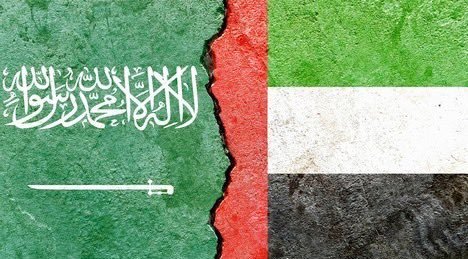
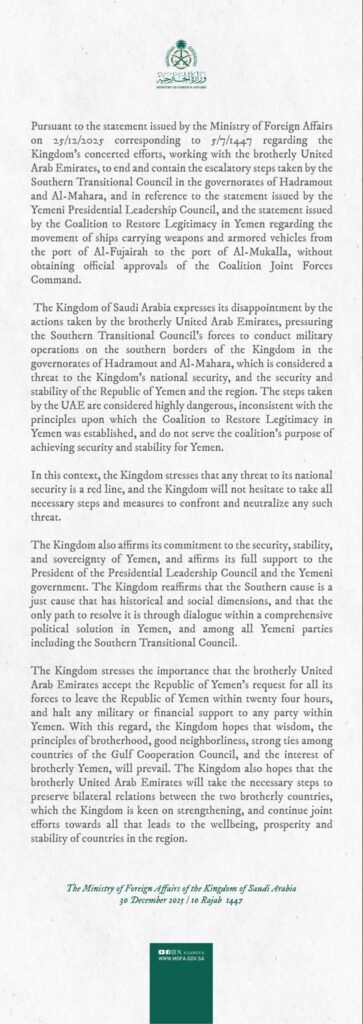
RIYADH: Saudi Arabia sharply escalated tensions with the United Arab Emirates on Tuesday, declaring that its national security was a “red line” and backing a 24-hour demand for Emirati forces to leave Yemen, following a Saudi-led coalition airstrike on the southern port city of Mukalla. The move signalled the most serious public rift between the two Gulf allies since the Yemen war began nearly a decade ago.
The Saudi-led coalition said the strike targeted unauthorised foreign military support for southern Yemeni separatists backed by the UAE. Shortly afterward, Rashad al-Alimi, head of Yemen’s Saudi-supported Presidential Leadership Council, formally endorsed the demand for Emirati withdrawal and urged Abu Dhabi to comply, warning that continued violations would undermine Yemen’s sovereignty and regional security.
The escalation reflects deepening Saudi concerns over the growing influence of the Southern Transitional Council, a powerful faction seeking autonomy or independence for southern Yemen. While the STC has played a role in fighting the Iran-aligned Houthi movement, it has also clashed repeatedly with Saudi-backed government forces, exposing widening contradictions within the coalition’s original mission.
Mukalla, located in Hadramout province, has emerged as a focal point of the dispute. The province borders Saudi Arabia and occupies a strategic position along key maritime routes in the Arabian Sea. Riyadh has long warned against any military expansion by separatist forces in Hadramout, viewing instability there as a direct threat to its national security. The STC’s recent advances in the area, which broke years of relative military stalemate, appear to have prompted Saudi Arabia’s latest response.
In a further escalation, Al-Alimi cancelled a defence agreement with the UAE and accused Abu Dhabi of deliberately fuelling internal conflict by directing and supporting the STC’s military actions. In a televised address, he said it had been “definitively confirmed” that the UAE had pressured the group to challenge state authority through armed escalation. The UAE’s foreign ministry did not immediately respond to requests for comment.
The fallout extended beyond Yemen’s borders, rattling regional markets. Major Gulf stock indexes traded lower following the flare-up, reflecting investor concerns that tensions between Saudi Arabia and the UAE could disrupt broader economic and diplomatic cooperation. Both countries are influential members of OPEC, and analysts warned that sustained political friction could complicate coordination on oil output policy ahead of a virtual meeting of the group scheduled for Sunday.
According to the coalition, the Mukalla strike followed the arrival of two vessels from the UAE port of Fujairah over the weekend without authorisation. The ships allegedly disabled their tracking systems upon arrival and unloaded weapons and combat vehicles intended for the STC. Saudi state media released footage of a vessel identified as Greenland, which it said transported military equipment from Fujairah to the Yemeni port.
Two sources told World News Network (WNN) that the airstrike targeted the dock area where the cargo was unloaded. WNN could not independently verify what was struck or the nature and origin of any materials involved. Footage broadcast by Yemeni state television showed smoke rising from the port in the early morning hours, along with damaged vehicles in the vicinity.
Following the strike, Al-Alimi imposed a 72-hour no-fly zone and ordered a temporary sea and land blockade on all ports and crossings, allowing exemptions only with coalition approval. However, the measures immediately exposed fractures within Yemen’s leadership. Aidarous al-Zubaidi, head of the STC and deputy head of the presidential council, rejected the orders in a joint statement with several other council members, asserting that the UAE remained a central partner in the Arab Coalition.
The statement argued that no individual or faction had the authority to remove any country from the coalition, describing Al-Alimi’s decisions as lacking consensus. Since 2022, the STC has been part of a Saudi-backed power-sharing arrangement governing southern Yemen, even as it has continued to pursue its own political and territorial ambitions.
The crisis underscores how the Yemen conflict has evolved beyond a unified campaign against the Houthis into a complex struggle over influence, territory, and post-war political control. The UAE formally reduced its troop presence in Yemen in 2019 but has maintained significant leverage through allied local forces, while Saudi Arabia has sought to preserve Yemen’s territorial integrity and secure its southern frontier.
Analysts warned that the growing rift risks undermining fragile efforts to stabilise the conflict. As Saudi Arabia and the UAE confront each other over southern Yemen, the Houthis continue to control the north, including the capital Sanaa, potentially benefiting from the coalition’s internal divisions.
Saudi Arabia said it would continue to block any military support to Yemeni factions without coordination with the internationally recognised government, signalling its readiness to enforce red lines despite the risk of further straining relations with Abu Dhabi. Whether the standoff leads to renewed diplomacy or marks the start of a deeper realignment among Gulf powers remains uncertain, but the episode has made clear that Yemen’s war is increasingly shaped by competing regional agendas rather than a single, cohesive coalition strategy.
–Nayera Elimam
READ FULL E- MAGAZINE (WORLDAFFAIRS) – A COMPLETE VIEW ON GEOPOLITICS, WORLD ECONOMY & GLOBAL POLICY