


DOHA,: Qatar’s prime minister said Saturday that Gaza ceasefire reached a “critical” as first phase of the winds down, with the remains of Israeli hostage still to be transferred by militants.
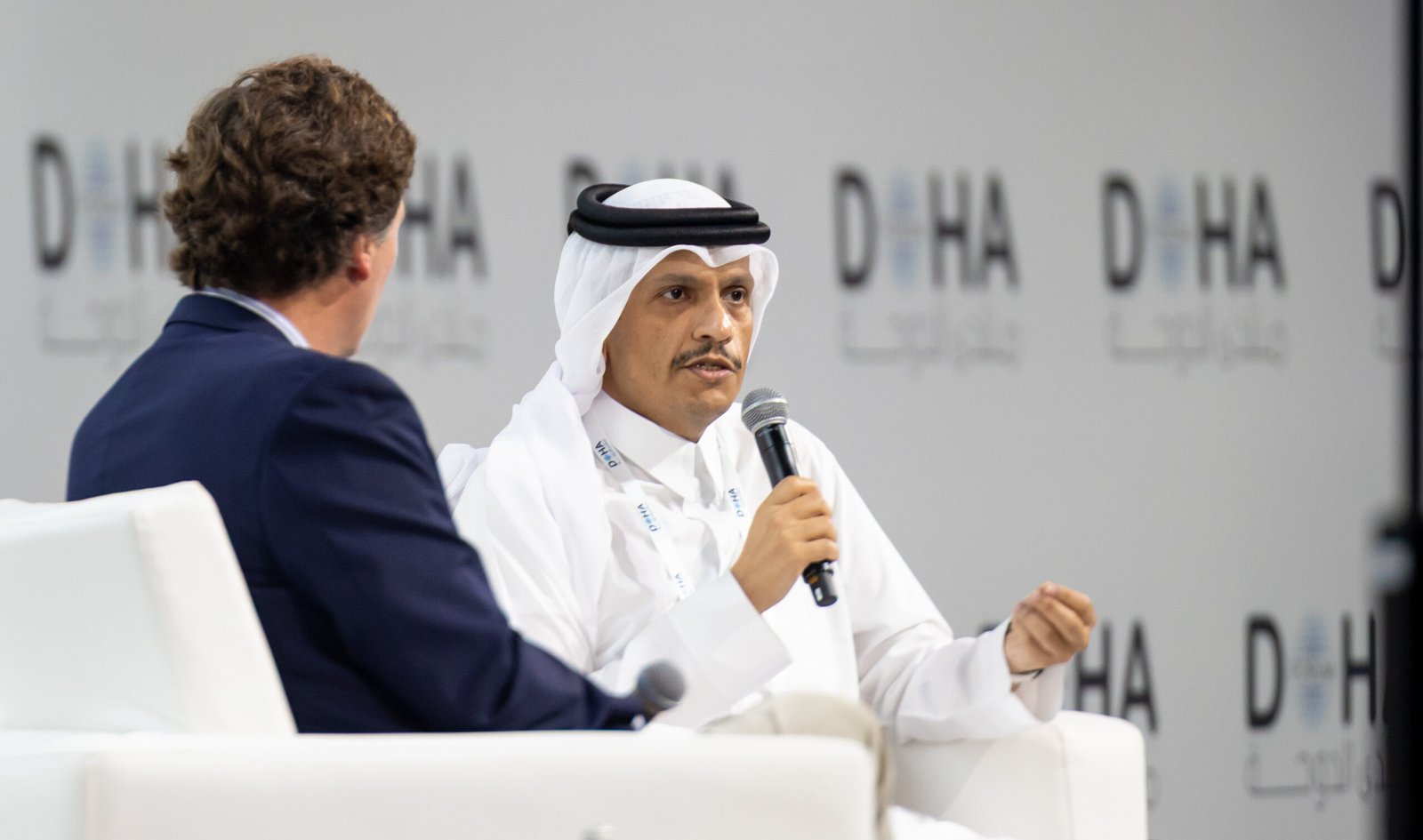
Speaking at the Doha Forum, Sheikh Mohammed bin Abdulrahman Al Thani said international mediators, led by the United States and including Qatar, Turkey and Egypt, are working “to force way forward” toward a second phase that would consolidate the deal.
“What we have just done is a pause,” he told participants. “We cannot consider it yet a ceasefire.” A ceasefire, he said, requires “a full withdrawal of Israeli forces, stability back in Gaza, and people able to go in and out, which is not the case today.”
Although the truce stopped the large-scale fighting of the two-year war, Gaza health officials say more than 360 Palestinians have been killed by Israeli fire since the pause took effect on Oct. 10. In the latest incident, Shifa Hospital reported that two Palestinians were killed in an airstrike northwest of Gaza City.
The Israeli army said it was not aware of an airstrike in that area but reported soldiers had killed three militants who crossed the “yellow line” into the Israeli-controlled northern part of Gaza and “posed an immediate threat.” The military has previously acknowledged several attacks on Palestinians it says crossed the ceasefire line.
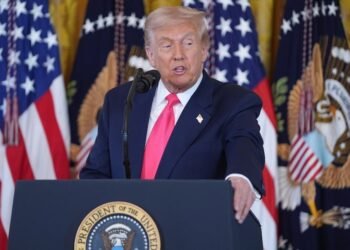
Under the first phase of U.S. President Donald Trump’s 20‑point peace plan, fighting was halted and dozens of hostages held in Gaza were exchanged for hundreds of Palestinians in Israeli prisons. Israel dispatched a delegation to Egypt last week for talks on returning the remains of the final hostage.
The second phase, which has yet to begin, envisions deploying an international security force in Gaza, forming a new technocratic administration for the territory, disarming Hamas ultimately withdrawing Israeli forces.
Arab and Western officials told media that an international body to oversee the ceasefire, to be chaired by Trump, is expected to be named by year’s end. Over the longer term, the plan foresees a potential “pathway” toward Palestinian statehood.
Qatar’s prime minister said even the next phase should be seen as “temporary,” arguing that lasting peace in the region depends on the eventual creation of a Palestinian state, a prospect opposed by Israel’s current hard-line government.
“If we are just resolving what happened in Gaza, the catastrophe that happened in the last two years, it’s not enough he said. “There is a root for this conflict. And this conflict is not only about Gaza.”
“It’s about Gaza. It’s about the West Bank. It’s about the rights of the Palestinians for their state,” he added. “We are hoping that we can work together with the U.S. administration to achieve this vision at the end of the day.”
Turkish Foreign Minister Hakan Fidan, also addressing the forum, said there are “big questions” surrounding the proposed international security force for Gaza — including which countries will participate, how it will be commanded and what its first tasks will be.
Turkey is one of the guarantors of the ceasefire, but Israel, which strained relations with Ankara, has rejected any Turkish role in the force. “Thousands of details, questions are place,” Fidan said. “I think once we deploy [the] ISF, the rest will come.”
A day after an overwhelming international vote to renew its mandate, the U.N. agency for Palestinian refugees said its future role in Gaza remains unclear.
Throughout the war, Israel and the United have sidelined UNRWA, accusing it of cooperating with Hamas, allegations the agency denies. Tamara Alrifai, UNRWA’s director of external relations and communications, said the agency continues to provide humanitarian and educational services in Gaza but has been excluded from U.S.-led talks on the second phase of the ceasefire.
Alrifai noted that UNRWA effectively functions as Gaza’s “public sector,” employing about 12,000 staff. Replicating that network, she said, would be extremely difficult for any other body. “If you squeeze UNRWA out, what other agency can fill that void?” she asked on the sidelines of the Doha Forum.
The U.S., once UNRWA’s largest donor, halted funding in early 2024. On Friday, the U.N. General Assembly renewed the agency’s mandate through 2029, but Alrifai said severe financial shortfalls persist. “Votes are great. Cash is better,” she said.
The current war began on Oct. 7, 2023, when Hamas‑led militants stormed into Israel, killing about 1,200 people and seizing more than 250 hostages. Israel’s subsequent offensive has killed over70,000 Palestinians, according to Gaza’s Health Ministry.
The ministry does not distinguish between civilians and combatants says nearly half of those killed have been women and children. Although it is part of Gaza’s Hamas-run administration, its casualty figures are widely regarded by the U.N. and other international organizations as broadly reliable.
– Magdy Federman