


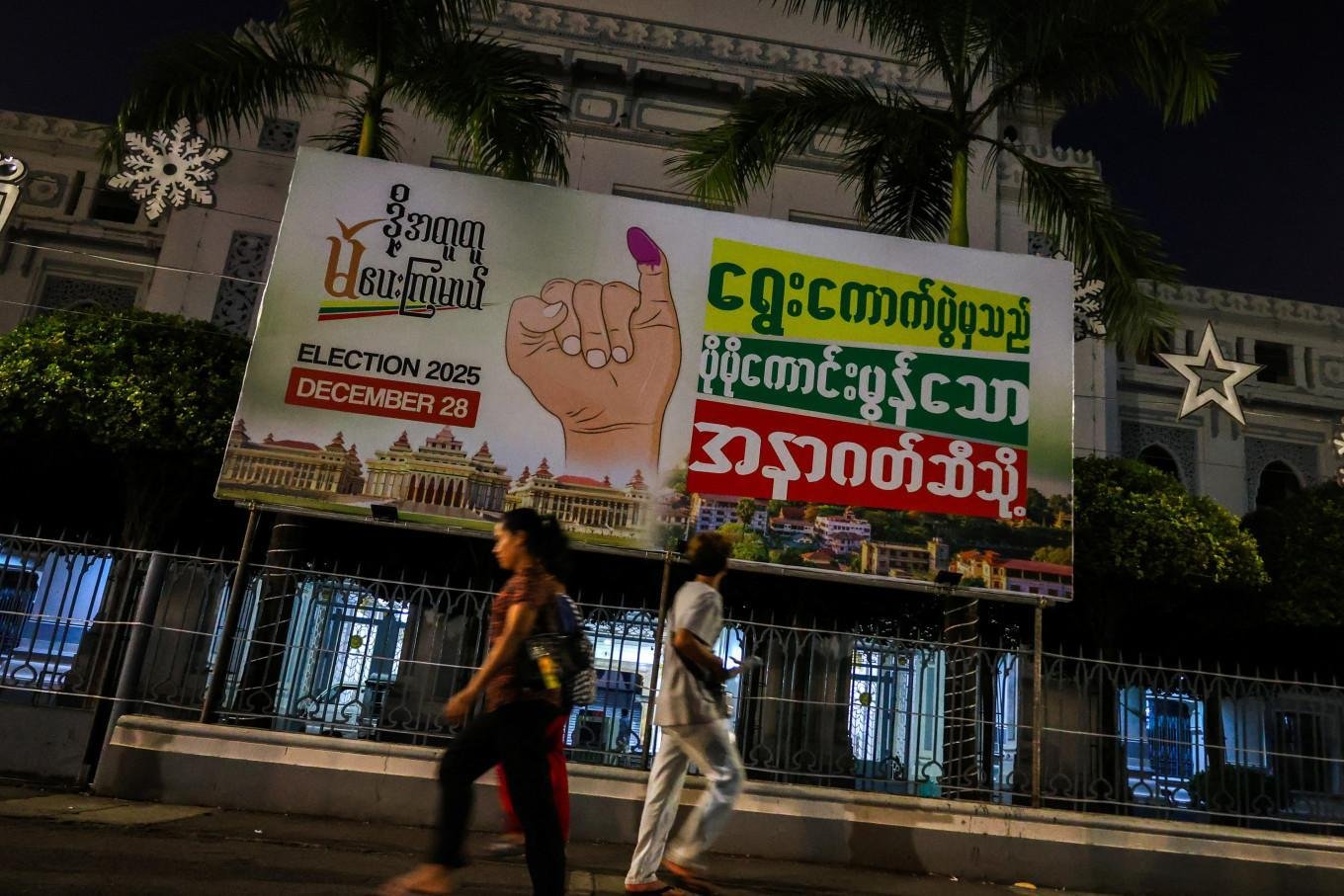
YANGON: Polls opened on Sunday for the first phase of Myanmar’s general election, the country’s first in five years, organised under military rule as civil conflict continues across large parts of the country. The vote marks a key political moment for the junta that seized power in February 2021, even as critics dismiss the process as tightly controlled and lacking democratic legitimacy.
Voting began in major urban centres including Yangon, the commercial hub, and Naypyitaw, the capital, with ballots cast at schools, government offices and religious buildings. Security was visibly heightened, with armed personnel deployed at polling stations and military vehicles patrolling key roads. Authorities have also introduced electronic voting machines for the first time, a move officials say is aimed at improving efficiency but which critics view with scepticism amid tight information controls.
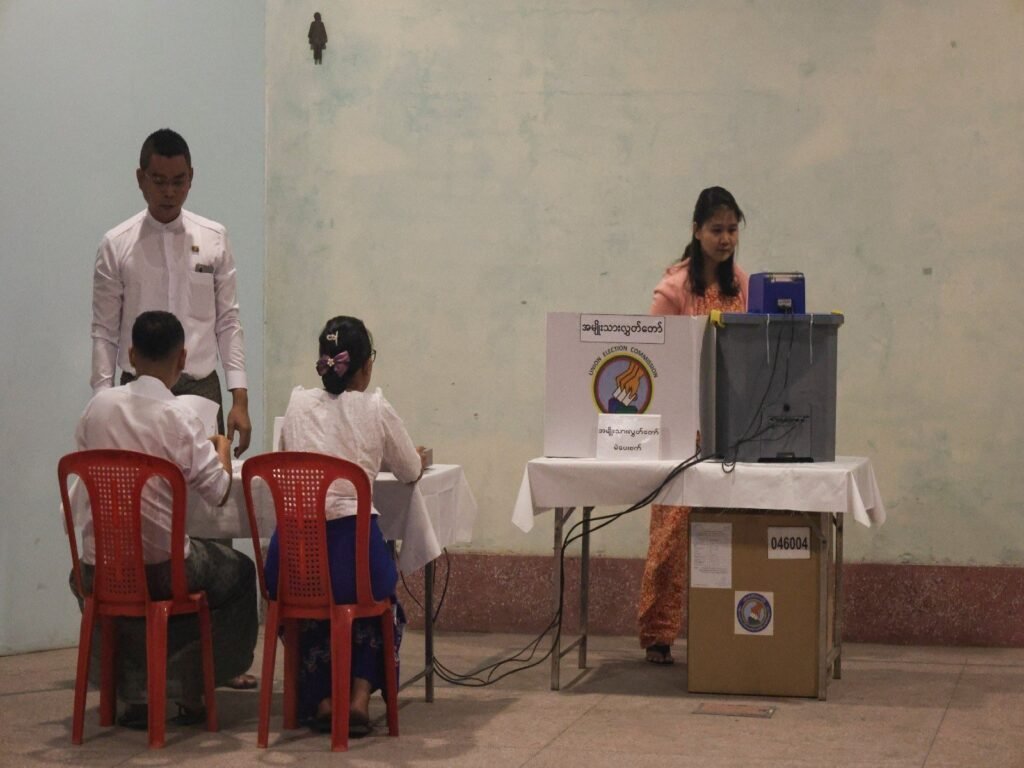
The election comes as Myanmar remains gripped by widespread violence between the military and armed resistance groups aligned with the opposition. While some resistance organisations had earlier threatened to disrupt the polls, no major incidents were reported during the opening hours of voting.
Opposition parties and independent observers argue that the election is designed to provide a veneer of legitimacy to continued military rule rather than represent a genuine return to civilian governance. Several major political forces have been excluded, and strict limits on free expression, assembly and media coverage remain in place. The military-backed Union Solidarity and Development Party (USDP) is widely expected to dominate the results, reinforcing concerns that the process will merely formalise the junta’s grip on power. READ FULL MAGAZINE HERE;
Myanmar’s deposed civilian leader Aung San Suu Kyi, now 80, is not participating. She is serving a 27-year prison sentence following a series of convictions that international rights groups and Western governments describe as politically motivated. Her party, the National League for Democracy (NLD), which won a landslide victory in the 2020 election, was dissolved in 2023 after refusing to re-register under new military-imposed electoral laws.
Despite the criticism, the junta sees the election as a critical step toward what it describes as a “disciplined democracy.” Analysts say the vote may also provide diplomatic cover for neighbouring countries such as China, India and Thailandto maintain engagement with Myanmar’s rulers, framing the election as a stabilising measure. Western nations, however, continue to enforce sanctions against senior military leaders over the coup, human rights abuses and the ongoing war against opposition forces. READ FULL MAGAZINE HERE;
With polling taking place in phases and large swathes of the country effectively outside the military’s control, questions remain over voter turnout, the credibility of results and the risk of post-election unrest. For many Myanmar citizens, the vote underscores not a political transition, but the deep divide between the junta’s roadmap and the reality on the ground.
-Peck Wong
READ FULL MAGAZINE ON GEOPOLITICS, WORLD ECONOMY & GLOBAL POLICY