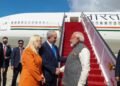



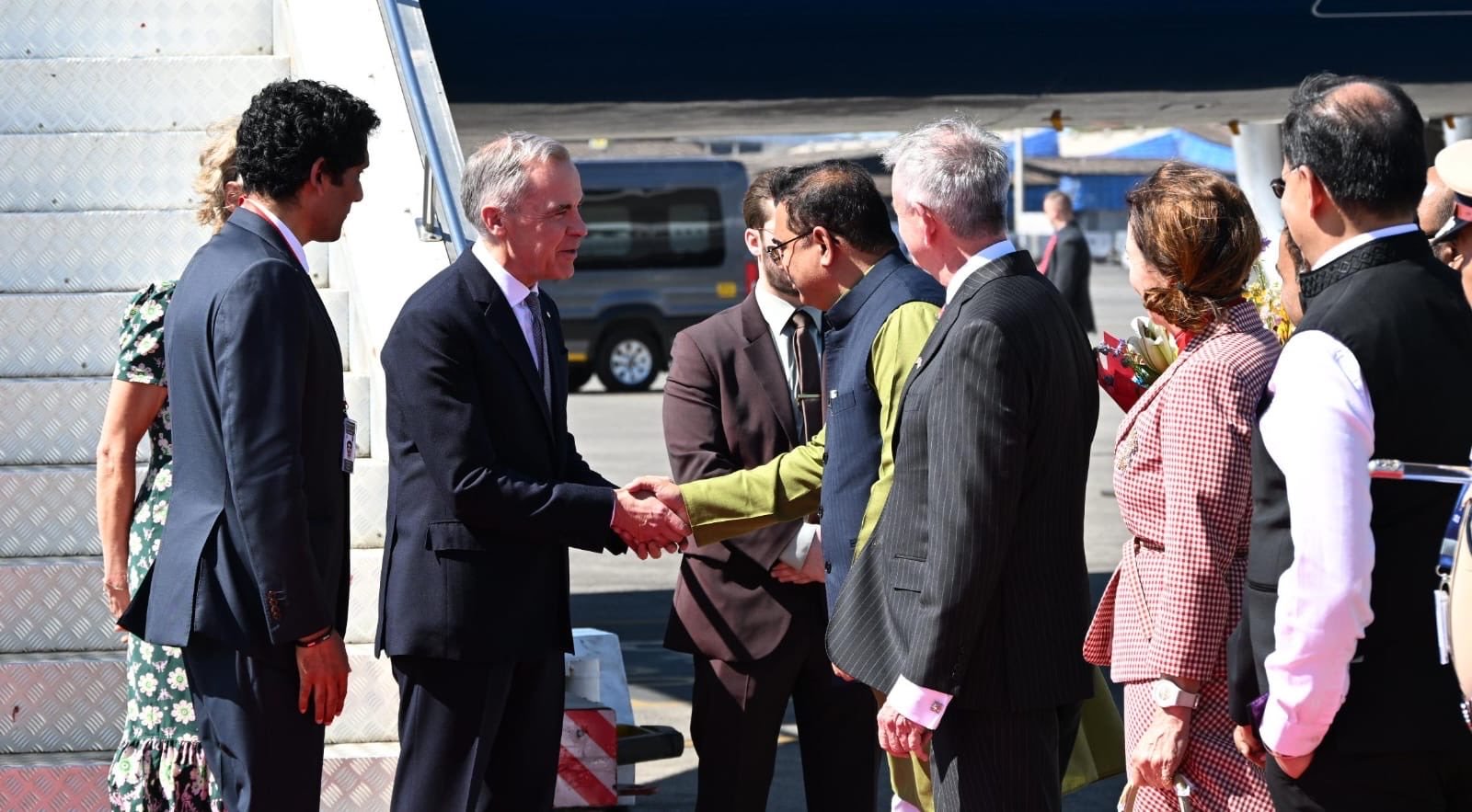
OTTAWA/MUMBAI: Canadian Prime Minister Mark Carney arrives in India on Friday for his first official visit, marking a decisive effort to repair strained bilateral ties and reposition Canada within a rapidly shifting global trade order.
Carney begins his trip in Mumbai, where he will meet leading business executives and formally launch negotiations toward a comprehensive trade agreement expected to conclude by November. He will then travel to New Delhi for high-level talks with Prime Minister Narendra Modi, in what officials describe as a pivotal diplomatic reset between the two countries.
The visit comes after years of tension following allegations by former Prime Minister Justin Trudeau that Indian agents were linked to the assassination of a Canadian citizen associated with Sikh separatist activism claims New Delhi has firmly denied. The fallout significantly cooled diplomatic engagement and disrupted trade discussions.
Carney’s approach signals a clear strategic shift. Unlike previous Canadian leaders, he will not visit Punjab, a politically sensitive region tied to Sikh separatist activism and a major source of Indian migration to Canada. Analysts say the decision reflects a pragmatic recalibration aimed at economic diplomacy rather than domestic political signaling.
“This is a business-first visit,” said Goldy Hyder, president of the Business Council of Canada. “The Prime Minister is focused on attracting capital and strengthening Canada’s economic sovereignty.”
The India visit forms part of Carney’s broader strategy to reduce Canada’s dependence on the United States amid ongoing tariff tensions and renewed trade uncertainty under President Donald Trump. In recent months, Carney has actively pursued deeper engagement with China, Middle Eastern economies, and Indo-Pacific partners, advocating a new trading architecture led by “middle powers” capable of stabilizing global commerce.
The timing is notable. The European Union recently finalized a landmark trade agreement with India, heightening expectations that Ottawa could follow with a similar pact. India’s high commissioner to Canada indicated earlier this year that discussions may include a 10-year C$2.8 billion uranium supply agreement, alongside cooperation in oil and gas, artificial intelligence, quantum computing, education, environmental initiatives, and cultural exchange.
Carney’s leadership style contrasts sharply with that of his predecessor. Trudeau’s 2018 India visit was overshadowed by criticism over public optics and concerns raised by New Delhi regarding “anti-India activities” in Canada. Observers suggest Carney’s more restrained and strategic posture may help rebuild trust.
“Carney projects gravitas and strategic focus,” said Professor Partha Mohanram of the University of Toronto. “He is approaching India with economic priorities at the forefront.”
However, the reset has not been universally welcomed. The World Sikh Organization of Canada criticized the government for failing to ensure stronger safeguards for Sikh Canadians against alleged foreign interference. Canadian Foreign Minister Anita Anand acknowledged ongoing high-level discussions with India regarding security concerns, noting new measures to monitor criminal financial flows, digital threats, and surveillance risks affecting diaspora communities.
Anand emphasized that while Canada seeks to diversify trade and partnerships, national security remains paramount. “No country will ever have a pass when it comes to the domestic safety and security of Canada,” she said.
Following India, Carney will travel to Australia to address parliament and strengthen defense and trade ties, before meeting Japanese Prime Minister Sanae Takaichi to discuss cooperation in autos, energy, and critical minerals. The multi-nation tour reflects what former adviser Jonathan Kalles described as a “principled and pragmatic” foreign policy approach suited to an era of geopolitical uncertainty.
“When the global environment is volatile, the Prime Minister’s job is to advance Canada’s interests,” Kalles said. “Diversifying trade and strengthening the economy are central to that mission.”
Carney’s India visit, therefore, is more than a diplomatic courtesy call. It represents a test case for his emerging doctrine: positioning Canada as a confident middle power seeking balanced partnerships in an increasingly multipolar world.
– Dr. Shahid Siddiqui; follow via X @shahidsiddiqui