


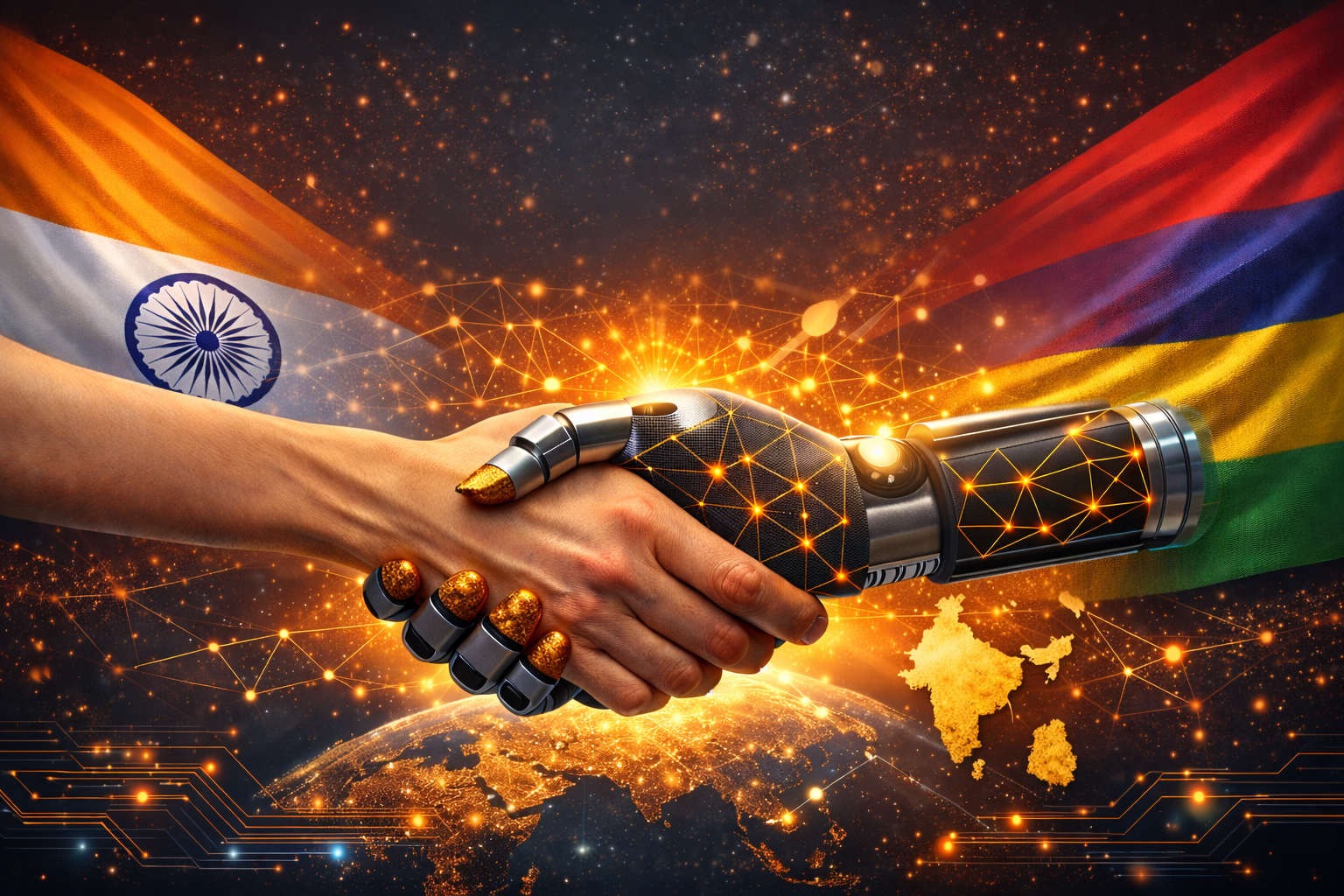
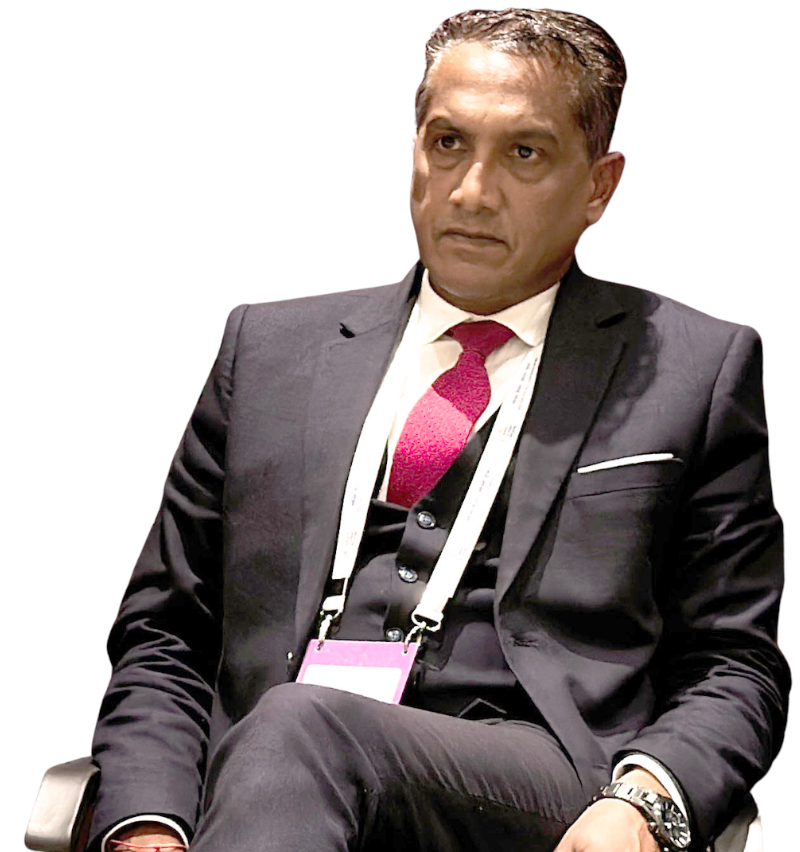
In an exclusive interview with WorldAffairs News Network (WNN), Mauritius’ Minister of Information Technology, H.E. Avinash Ramtohul, outlines his country’s ambitious vision to position Mauritius as a trusted AI and digital innovation hub in the Indian Ocean. Emphasizing inclusive growth, secure digital infrastructure, and responsible governance, the Minister highlights how deeper India–Mauritius collaboration can drive sustainable AI development and create a strategic digital bridge to Africa and other emerging markets.
As AI reshapes the global order, Mauritius is positioning itself as an agile, trusted digital hub in the Indian Ocean. In this exclusive interview with World Affairs Editor in Chief- Dr. M Shahid Siddiqui, the Minister of Information Technology, H.E AVINASH RAMTOHUL outlines how deeper India–Mauritius collaboration can drive inclusive innovation, secure digital infrastructure, and responsible AI governance for emerging economies.
Dr. M Shahid Siddiqui: Welcome to WorldAffairs News. You emphasized inclusive and sustainable AI at the Summit in India. How can Mauritius and India collaborate to ensure AI narrows rather than widens the digital divide?
H.E AVINASH RAMTOHUL: Thank You for having me. Inclusion must be designed into AI systems from the very beginning. In Mauritius, we are fortunate to have an digitally-ready population, with 178 mobile subscriptions per 100 residents, 96% broadband coverage across 3G/4G/5G networks, 89% smartphone penetration in households and an internet penetration rate of 80% as of January 2025. Connectivity, however, is only the foundation. The true question is how AI enhances human capability rather than replacing it or excluding those who are digitally vulnerable.
India’s experience in scaling digital public platforms to hundreds of millions of citizens offers practical lessons in inclusion by design. Mauritius and India can collaborate on AI tools that are multilingual, affordable, accessible to persons with disabilities, and adapted to local realities. Whether in education, telemedicine, agricultural advisory systems or citizen service delivery, our objective is clear: AI must reduce structural inequality, not amplify it. Inclusion is not a social add-on; it is a strategic imperative for stability and growth.
Dr. M Shahid Siddiqui: As a small island developing state, what unique opportunities and challenges does Mauritius face in adopting AI and how can India support this journey?
H.E AVINASH RAMTOHUL: Mauritius’ scale presents both constraints and strategic advantages. Our domestic market is small, which limits the size of purely local AI ecosystems. However, our governance agility is a strength. We can pilot regulatory sandboxes, test ethical AI frameworks, and adapt policy frameworks with speed and coherence.
We are currently advancing our Digital Transformation Blueprint built on a Public-Private-People Partnership (PPPP) model and anchored in human-centered, innovation-friendly principles . Our strong cybersecurity posture and Tier 1 ranking provide a trusted environment for digital experimentation .
India can support Mauritius through structured capacity-building partnerships, advanced AI research collaboration, joint training programs, and technical knowledge transfer. Rather than replicating large-scale models, Mauritius aims to become a highly trusted, agile AI jurisdiction that leverages its size as a strategic asset.
Dr. M Shahid Siddiqui: India’s digital public infrastructure model has gained global recognition. Are there elements of this framework that Mauritius could adapt to strengthen AI-driven governance and public service delivery?
H.E AVINASH RAMTOHUL: India’s digital public infrastructure model is globally recognized because it demonstrates that scale, inclusion, and innovation can coexist within a coherent architecture. What makes it particularly compelling is not just the technology itself, but the philosophy behind it, interoperability, open standards, secure identity systems, and data empowerment at scale.
Mauritius has already laid important foundations through its Digital Transformation Blueprint, anchored in human-centered, innovation-friendly governance and a Public-Private-People Partnership model. Our strong performance on the World Bank GovTech Maturity Index and our advanced connectivity indicators provide a solid base. The next phase is to ensure that AI is embedded across this infrastructure in a way that enhances decision-making, transparency and service efficiency.
There are several elements of India’s DPI framework that are particularly relevant for Mauritius. First, interoperable digital identity ecosystems can significantly enhance AI-enabled public services, allowing secure, consent-based access to citizen data while preserving privacy. Second, open API frameworks encourage innovation by allowing startups and private sector actors to build value-added AI services on top of government platforms. This stimulates a dynamic digital economy rather than a closed system.
Third, consent-driven data governance models are essential. AI systems are only as effective as the data that feeds them. A trusted data exchange framework, where citizens retain control over how their data is used, builds public confidence while enabling AI-powered service delivery. This aligns closely with our emerging AI Strategy and FAIR governance principles along with our National Data Strategy.
Fourth, institutional architecture matters. India’s DPI has shown that coordinated cross-ministerial integration is critical. In Mauritius, we are strengthening interoperability across ministries to avoid digital silos. AI-driven governance must not function in isolated pockets; it must be embedded horizontally across health, finance, education, land management, social protection and regulatory oversight.
However, adaptation is essential. Mauritius does not seek to replicate India’s scale, but rather to contextualize and refine elements that suit our size, demographic profile, and legal environment. Our advantage as a small state is agility. We can integrate AI layers across digital public infrastructure more rapidly, test regulatory sandboxes, and refine governance models in real time.
In the AI era, infrastructure is not only physical or digital, it is institutional. And that is where strategic collaboration between India and Mauritius can yield transformative outcomes.
Dr. M Shahid Siddiqui: How do you envision Mauritius positioning itself as a regional AI and digital innovation hub and what role can Indian technology firms and startups play?
H.E AVINASH RAMTOHUL:Mauritius sits at a strategic crossroads between Africa and Asia. We offer political stability, strong regulatory institutions, robust digital penetration, and a bilingual business environment. Mauritius is the best place for doing business in Africa.
Indian technology firms and startups can leverage Mauritius as a testbed for African expansion, a regulatory sandbox for emerging technologies and a financial and innovation gateway into the wider Indian Ocean region. We are particularly interested in joint incubation platforms, co-investment frameworks, AI accelerators and research collaboration that link Mauritian entrepreneurs with Indian innovation ecosystems.
The future AI landscape will not be defined by geography alone, but by trusted digital corridors. Mauritius is ready to become one of those corridors.
Dr. M Shahid Siddiqui: Which sectors hold the strongest potential for AI collaboration between India and Mauritius?
H.E AVINASH RAMTOHUL: Several sectors present strong immediate synergies. Fintech is a natural area, given Mauritius’ role as a financial hub and India’s leadership in digital payments innovation. Climate resilience is another critical domain; as a Small Island Developing State, Mauritius is highly exposed to climate risks, and AI-driven predictive systems can strengthen disaster preparedness and environmental monitoring.
Maritime security in the Indian Ocean also offers strategic collaboration potential, with AI enhancing surveillance, logistics and port management. Tourism, one of Mauritius’ economic pillars, can benefit from AI-driven analytics and smart visitor management systems. Healthcare, too, presents enormous opportunities in predictive diagnostics and remote medical support.
Health is an area where AI can be truly transformative. Mauritius is advancing toward more integrated, digital health systems, and AI can strengthen early diagnostics, predictive epidemiology, medical imaging, and telemedicine services, especially for remote or vulnerable populations. India’s experience in deploying scalable digital health platforms and AI-assisted diagnostics offers valuable lessons. Joint innovation in AI-enabled health solutions tailored to emerging economies could significantly improve public health outcomes while reducing long-term costs.
Dr. M Shahid Siddiqui: Capacity building remains critical. What steps can both countries take to deepen cooperation in skilling, research and talent mobility?
H.E AVINASH RAMTOHUL: Capacity building is the cornerstone of any credible AI strategy. Infrastructure can be built, policies can be drafted, but without human capital, AI transformation will remain superficial. Mauritius is fortunate to have a digitally connected population, with strong broadband penetration, high smartphone usage and widespread internet access . This gives us a strong foundation. However, AI requires a deeper layer of specialisation, data scientists, AI engineers, cybersecurity analysts, AI ethicists and policy architects.
India’s emergence as a global AI powerhouse presents an extraordinary opportunity for structured collaboration. We envision a multi-layered partnership that operates at three levels: education, research and industry integration.
At the education level, we can establish joint AI fellowship programmes, co-designed curricula between Mauritian and Indian universities and certification pathways aligned with emerging industry standards. Faculty exchanges, visiting professorships, and hybrid learning platforms can accelerate knowledge transfer. AI literacy must also extend beyond technical disciplines to public administration, law, health and education ,ensuring that AI adoption is cross-sectoral rather than confined to ICT professionals.
At the research level, we see strong potential for joint AI research labs focused on practical problem-solving for emerging economies. Rather than pursuing abstract innovation alone, our collaboration should target real-world challenges, climate resilience modeling, digital health diagnostics, maritime analytics, fintech compliance systems and AI governance frameworks suited to developing nations.
At the industry level, talent mobility must be circular and strategic. Mauritian professionals should have pathways to train within India’s leading AI ecosystems and return with enhanced capabilities. At the same time, Indian experts can collaborate in Mauritius to help build local competence, mentor startups, and strengthen applied AI deployment. The objective is not brain drain, but brain circulation.
We are also exploring the idea of AI Centers of Excellence and regional training centres that could position Mauritius as a skills bridge between India and Africa. With our connectivity indicators and institutional stability, Mauritius can host structured capacity-building programs for the wider Indian Ocean region.
Furthermore, AI skilling must integrate ethical literacy and governance awareness. As we advance our National AI Strategy and FAIR principles, we recognize that technical proficiency must be accompanied by responsibility, accountability, and human-centered design. In essence, sustainable AI growth will not be determined solely by algorithms or computing power, but by the quality of our human capital. Through structured India–Mauritius cooperation, we can build a resilient talent ecosystem that empowers innovation, strengthens governance and positions both nations competitively in the evolving AI landscape.
Dr. M Shahid Siddiqui: How can India and Mauritius promote responsible, ethical and human-centric AI governance frameworks?
H.E AVINASH RAMTOHUL: Mauritius will soon publish its National AI Strategy accompanied by FAIR Guidelines, emphasizing fairness, accountability, integrity and responsibility. Our framework is rooted in human-centered governance and innovation-friendliness.
India and Mauritius share a common reality as emerging economies navigating rapid digital transformation. We understand that governance models designed for very large economies or highly centralized systems may not be directly transferable to smaller or developing contexts. Therefore, our collaboration can focus on building adaptable, proportionate regulatory frameworks that protect citizens without imposing excessive compliance burdens on startups and innovators.
One area of cooperation lies in algorithmic transparency and auditing mechanisms. As AI becomes embedded in financial systems, healthcare diagnostics, public administration and predictive governance, both countries can collaborate on developing practical standards for explainability, risk classification and accountability. Rather than theoretical guidelines, we need operational governance tools that regulators and institutions can realistically implement.
Data governance is another critical dimension. AI systems rely heavily on high-quality datasets, and emerging economies must balance innovation with privacy and sovereignty. Mauritius is strengthening secure data governance architectures within its Digital Transformation Blueprint, grounded in trusted digital infrastructure and strong cybersecurity posture. Joint collaboration with India can help refine consent-driven data exchange frameworks, cross-border data standards, and privacy-enhancing technologies that enable innovation while preserving citizen rights.
We also see scope for regulatory sandboxes and shared experimentation platforms. Mauritius, because of its size and agility, can function as a controlled environment to test AI governance mechanisms before broader deployment. India’s scale and technical expertise can provide validation and stress-testing of these frameworks.
Dr. M Shahid Siddiqui: What infrastructure priorities are central to Mauritius’ AI roadmap?
H.E AVINASH RAMTOHUL: AI requires strong foundational infrastructure. Mauritius already demonstrates high connectivity and digital penetration . Our next phase focuses on scalable cloud environments, secure data centres, sovereign data governance frameworks and advanced cybersecurity systems.
Indian industry can play a significant role through investment partnerships, cloud infrastructure collaboration, and secure compute ecosystems suited for emerging markets. Infrastructure is not merely technical; it is strategic sovereignty in the digital era.
Dr. M Shahid Siddiqui: Do you see Mauritius serving as a gateway for Indian AI innovation into Africa?
H.E AVINASH RAMTOHUL: Yes, very clearly and not merely as a geographic gateway, but as a strategic digital bridge. Mauritius occupies a unique position at the intersection of Africa, Asia and the Middle East. Historically, we have been a financial and trade conduit. In the AI era, we can become a trusted digital conduit.
Mauritius combines political stability, legal predictability, strong regulatory institutions, high digital penetration and a robust cybersecurity posture. These elements create a low-risk, high-trust environment for technology deployment and cross-border digital operations. For Indian AI firms seeking structured expansion into Africa, Mauritius offers a jurisdiction where innovation can be tested, adapted, and scaled responsibly.
But the gateway role goes beyond market access. It includes regulatory alignment, financial structuring, data governance frameworks and digital diplomacy. Mauritius has longstanding economic ties across the African continent and deep cultural and strategic ties with India. This dual connectivity allows us to act as an interoperability platform not only technologically, but institutionally.
Furthermore, as African markets accelerate digital adoption, there will be growing demand for AI solutions in fintech, agriculture, health, logistics, climate resilience and public administration. Mauritius can serve as a regional AI coordination hub hosting joint research centers, regulatory sandboxes, innovation accelerators and cross-border data partnerships that adapt Indian technologies to African realities.
There is also a strategic dimension. In the Indian Ocean region, digital infrastructure is becoming as critical as maritime routes. Trusted digital corridors will shape future economic flows. Mauritius can anchor one such corridor linking Indian innovation ecosystems with African opportunity landscapes in a secure, rules-based environment.
Dr. M Shahid Siddiqui: How can both countries strengthen cooperation in cyber resilience and secure digital infrastructure ?
H.E AVINASH RAMTOHUL: India and Mauritius can deepen cooperation through several strategic avenues. First, AI-powered threat intelligence sharing between our cybersecurity agencies and CERTs can enable real-time detection of emerging attack patterns. Second, joint cyber exercises and simulation platforms can help both countries test response mechanisms against AI-enabled attacks targeting critical infrastructure such as financial systems, telecommunications, energy grids, maritime systems, and healthcare platforms.
Third, we must focus on securing AI systems themselves. This includes collaboration on adversarial AI research, model robustness testing, algorithmic auditing, and the development of secure-by-design AI architectures. As AI increasingly powers public services and digital governance platforms, safeguarding training data, preventing model poisoning, and ensuring system integrity become essential components of national resilience.
Dr. M Shahid Siddiqui: Finally, what message would you like to share with Indian innovators and policymakers?
H.E AVINASH RAMTOHUL: Mauritius does not see itself as a passive observer in the AI revolution. We are building a structured, strategic and responsible AI ecosystem anchored in our Digital Transformation Blueprint with the vision to position the country as a regional leader in AI.
To Indian innovators, I say: Mauritius is your natural partner in the Indian Ocean, a stable, agile and trusted jurisdiction ready to co-create solutions for Africa and beyond. To policymakers, I say: let us shape AI not as a race for dominance, but as a partnership for development. In the AI century, collaboration between India and Mauritius can demonstrate that technological progress and human dignity are not competing objective, but complementary ambitions.
-WNN Desk
An interview of the Minister of IT, Mauritius, with WorldAffairs News Network (WNN) is also available in its international Print Edition — World Affairs News: Views & Analysis. The e-version can also be accessed through the link; https://thewnn.com/e-magazine/