

BISSAU: Guinea-Bissau has entered a new period of political uncertainty as its armed forces consolidated control following a dramatic coup that halted the announcement of presidential election results. The crisis has triggered widespread condemnation across Africa and beyond, particularly from Nigeria, the African Union, ECOWAS, South Africa, Portugal, France, and Qatar.
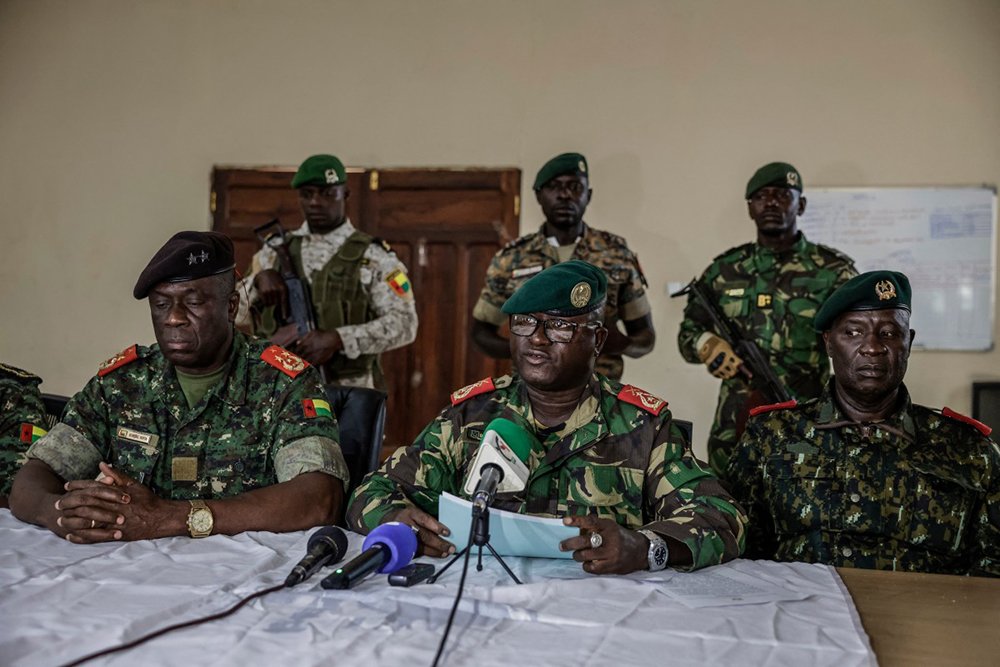
On November 26, 2025, soldiers seized power hours before provisional election results were expected. They dissolved state institutions, closed national borders, imposed a nationwide curfew, and established a military governing body, the High Military Command for the Restoration of National Security and Public Order. Soldiers in Guinea-Bissau on Thursday then announced a new junta leader, cementing a forceful takeover of power that began after a disputed presidential election, in what the main opposition candidate called a ploy to prevent him from taking over power.
A day later, the junta formally inaugurated Gen. Horta Inta-A Na Man as head of the military government. According to a declaration broadcast on state television, the military high command confirmed Inta-A would lead a one-year transition period. Inta-A, formerly the army chief of staff and a close ally of deposed President Umaro Sissoco Embaló, said “the inability of political actors to stem the deterioration of the political climate ultimately prompted the intervention of the armed forces.”
Guinea-Bissau, one of the world’s poorest nations, has been dogged by coups and attempted coups since gaining independence from Portugal more than five decades ago, including a failed attempt in October. The country of 2.2 million people remains a key transit point for drug trafficking between Latin America and Europe, a trend experts say continues to fuel its recurring political crises.
Embaló’s whereabouts remained unknown Thursday. He told French media a day earlier that he had been arrested by soldiers as gunshots rang out near the presidential palace. The opposition, meanwhile, alleged that Embaló had fabricated the coup to avoid an election defeat in Sunday’s closely contested presidential vote. The military takeover and the reported arrest of Embaló were “fabricated” to disrupt the election results expected Thursday, according to his rival Fernando Dias, who, like Embaló, has claimed victory.
The WNN (WorldAffairs News Network) could not independently verify Dias’ assertions. The opposition African Party for the Independence of Guinea and Cape Verde, along with Dias, had urged residents to protest the coup and demand the publication of results, but by Thursday morning, daily activities in the capital, Bissau, appeared normal, with businesses and public transport gradually resuming.
Nigeria strongly condemned the military intervention on November 27, calling it an “unconstitutional change of government” that threatens not only Guinea-Bissau’s democratic trajectory but the stability of the West African region. Nigeria demanded the release of detainees, respect for democratic institutions, and guaranteed safety for all election observers still in the country, warning that those responsible would be held accountable if they jeopardize peace or reverse democratic gains.
The Chairperson of the African Union Commission, Mahmoud Ali Youssouf, also condemned the coup, calling for respect for the electoral process and the unconditional release of President Embaló and other detained officials. Youssouf said the AU was ready to work with partners to restore stability and safeguard the democratic process. South Africa joined other African nations in condemning the takeover and called for “the immediate restoration of democracy and completion of the electoral process.” France also urged respect for constitutional order and democratic rule in the country.
The coup is the latest in a surge of military takeovers in West Africa, where democracy has increasingly been challenged by disputed elections and political instability, a trend analysts warn could embolden militaries across the region. As the junta begins its controversial one-year transition, Guinea-Bissau once again confronts a critical crossroads, testing both its internal resilience and the strength of international efforts to restore civilian rule.
• ⁃ WorldAffairs (WNN) Newsroom.