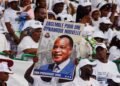



BANGUI: Voters in the Central African Republic (CAR) went to the polls on Sunday in national elections that are widely expected to hand President Faustin-Archange Touadera a third term, deepening Russia’s strategic footprint in one of Africa’s most fragile states.
Touadera, a 68-year-old former mathematics professor, is seeking re-election after a 2023 constitutional referendumremoved presidential term limits, a move critics condemned as a bid to remain in power indefinitely. His campaign rests heavily on claims of improved security, achieved with the backing of Russian mercenaries and Rwandan troops, after years of civil conflict.
A Touadera victory would further entrench Moscow’s role in the country. Russia has exchanged military support for privileged access to gold and diamond concessions, while Touadera has also signalled openness to foreign investment in lithium and uranium, resources of growing global strategic importance.
The opposition field comprises six candidates, led by former prime ministers Anicet-Georges Dologuele and Henri-Marie Dondra. Both narrowly survived legal challenges aimed at disqualifying them over alleged foreign citizenship. While they remain on the ballot, analysts say Touadera’s dominance over state institutions and campaign financing makes him the clear frontrunner.
Human Rights Watch said last month that efforts to block opposition candidates reflected “a pattern of administrative manoeuvring” favouring the ruling United Hearts Party, raising doubts over whether voters are being offered a genuine choice. READ FULL MAGAZINE HERE;
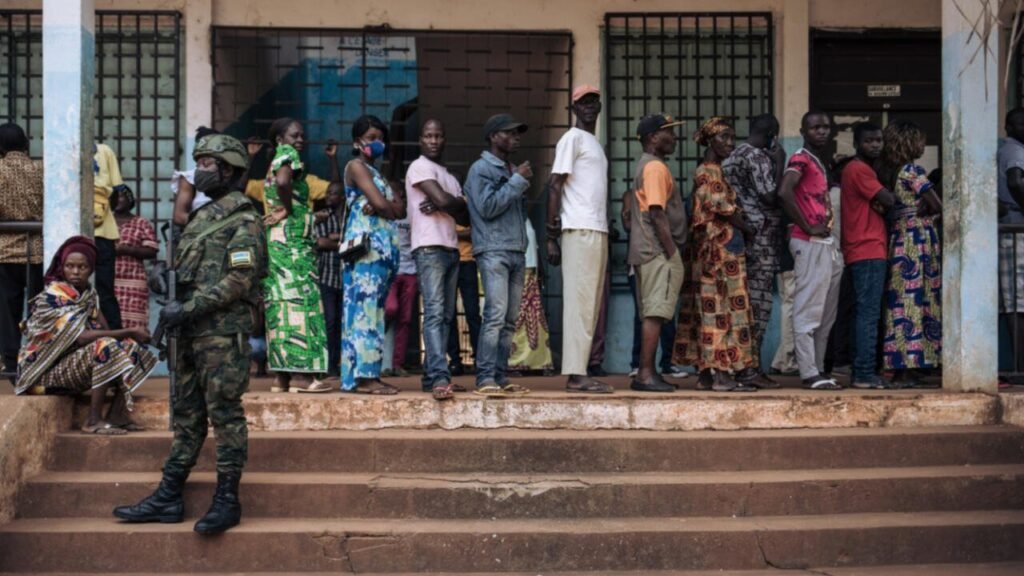
Security remains central to the political narrative. In 2018, CAR became the first country in West and Central Africa to deploy Russia’s Wagner mercenaries, a model later adopted by Mali, Burkina Faso and Niger. In 2020, Rwandan forcesintervened as rebels threatened Bangui and disrupted elections, preventing voting at roughly 14 percent of polling stations.
Touadera has since signed multiple peace agreements with rebel factions, bringing a measure of calm. However, stability remains fragile. Rebel groups have yet to fully disarm, reintegration efforts are incomplete, and spillover violence from neighbouring Sudan continues to destabilise eastern regions.
Sunday’s vote also covers legislative, regional, and municipal elections, making it a critical test of governance beyond the presidency. Provisional results are due by January 5. If no candidate secures more than 50 percent of the presidential vote, a runoff will be held on February 15, with legislative runoffs scheduled for April 5.
Risk consultancy Pangea-Risk warned that the likelihood of post-election unrest is high, as opposition parties are expected to contest Touadera’s anticipated win. A smooth electoral process, however, could strengthen the president’s argument that order is returning an image reinforced last year when the UN Security Council lifted an arms embargoand eased restrictions on diamond exports.
In November, the Security Council also extended the mandate of its peacekeeping mission in CAR, despite U.S. objections calling for a shorter extension and a gradual transfer of security responsibilities to Bangui.
As ballots are cast, the election is shaping up as more than a domestic contest. It is a referendum on constitutional rule, foreign military influence, and whether fragile stability can evolve into lasting peace or harden into entrenched power.
-Robbie Lawson
READ FULL MAGAZINE (A COMPLETE VIEW ON GEOPOLITICS, WORLD ECONOMY & GLOBAL POLICY)