



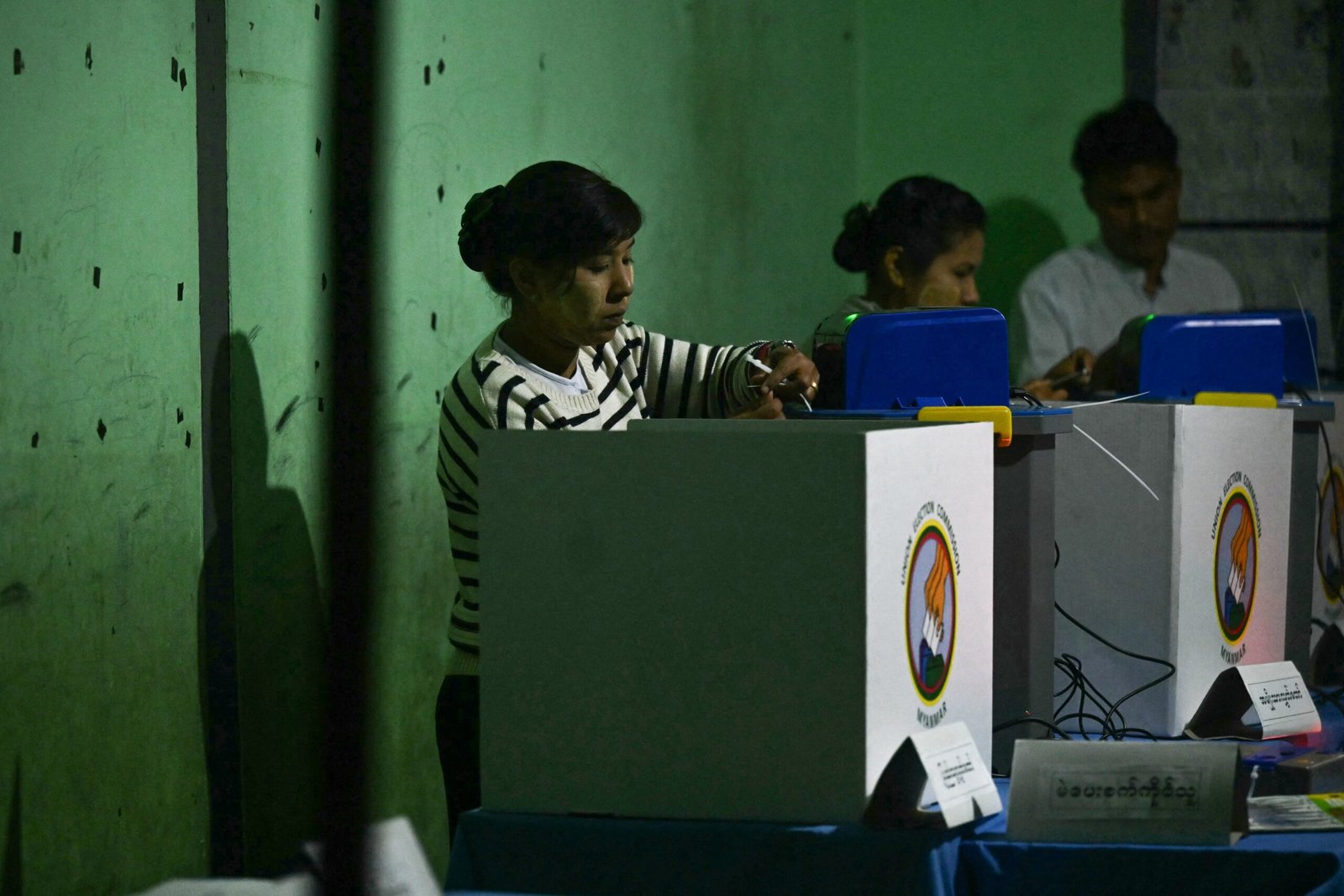
NAYPYIDAW, Myanmar: War-scarred Myanmar went back to the polls on Sunday for the second phase of the military-run election, despite widespread criticism that the vote is designed to cement the junta’s grip on power rather than restore democracy. The turnout in the first phase was notably low, reflecting both fear and public distrust, yet authorities pressed forward, presenting the process as a pathway to political stability.
The election comes nearly five years after the 2021 military coup that toppled the elected civilian government and imprisoned its leader, Nobel laureate Aung San Suu Kyi. Since then, the country has descended into a nationwide civil war that has engulfed large parts of the nation of 51 million, destroying infrastructure, displacing millions, and leaving humanitarian agencies warning of severe crisis conditions.
International analysts say the electoral playing field was deliberately engineered to ensure a decisive victory for the junta-backed Union Solidarity and Development Party (USDP).
“The USDP is on track for a landslide victory, which is hardly surprising given the extent to which the playing field was tilted in its favour,” said Richard Horsey, Senior Myanmar Adviser to the International Crisis Group. “This included the removal of serious rivals and laws designed to stifle opposition.”
Despite fighting raging across multiple regions, the regime plans voting across 265 of Myanmar’s 330 townships, including areas where it does not have full operational control. A final round of voting is scheduled for January 25.
The junta insists the election marks the beginning of a political transition. It argues that the process will bring stability and deliver a “better future” even as the humanitarian catastrophe deepens. According to the Armed Conflict Location & Event Data Project (ACLED), more than 16,600 civilians have been killed since the coup, while the United Nations estimates 3.6 million people are now displaced, one of the largest humanitarian crises in Asia.
However, analysts caution that any administration born from conflict-era polls will face a credibility deficit and global rejection. With resistance groups controlling significant territory, the idea of nationwide governance remains fragile and deeply uncertain.
Junta chief Min Aung Hlaing has avoided confirming political ambitions but continues to celebrate the electoral exercise as a success. During a recent visit to central Myanmar, he urged officials to push turnout higher, insisting the earlier round demonstrated a “strong desire” among citizens to participate in democracy, despite widespread violence and fear.
State media echoed that message, declaring the process a positive step forward. Yet for many inside Myanmar and much of the international community the vote symbolizes not democratic renewal, but an attempt to legitimize military rule under the guise of electoral procedure.
As Myanmar moves toward the final voting phase later this month, the central question remains unresolved: can a war-time election lacking meaningful competition and held under repression truly be considered democratic or is it simply the next chapter in institutionalizing authoritarian control?
-Martha Clerk
READ THE FULL E-MAGAZINE | WorldAffairs: For Decision-Makers Who Need More Than Headlines