


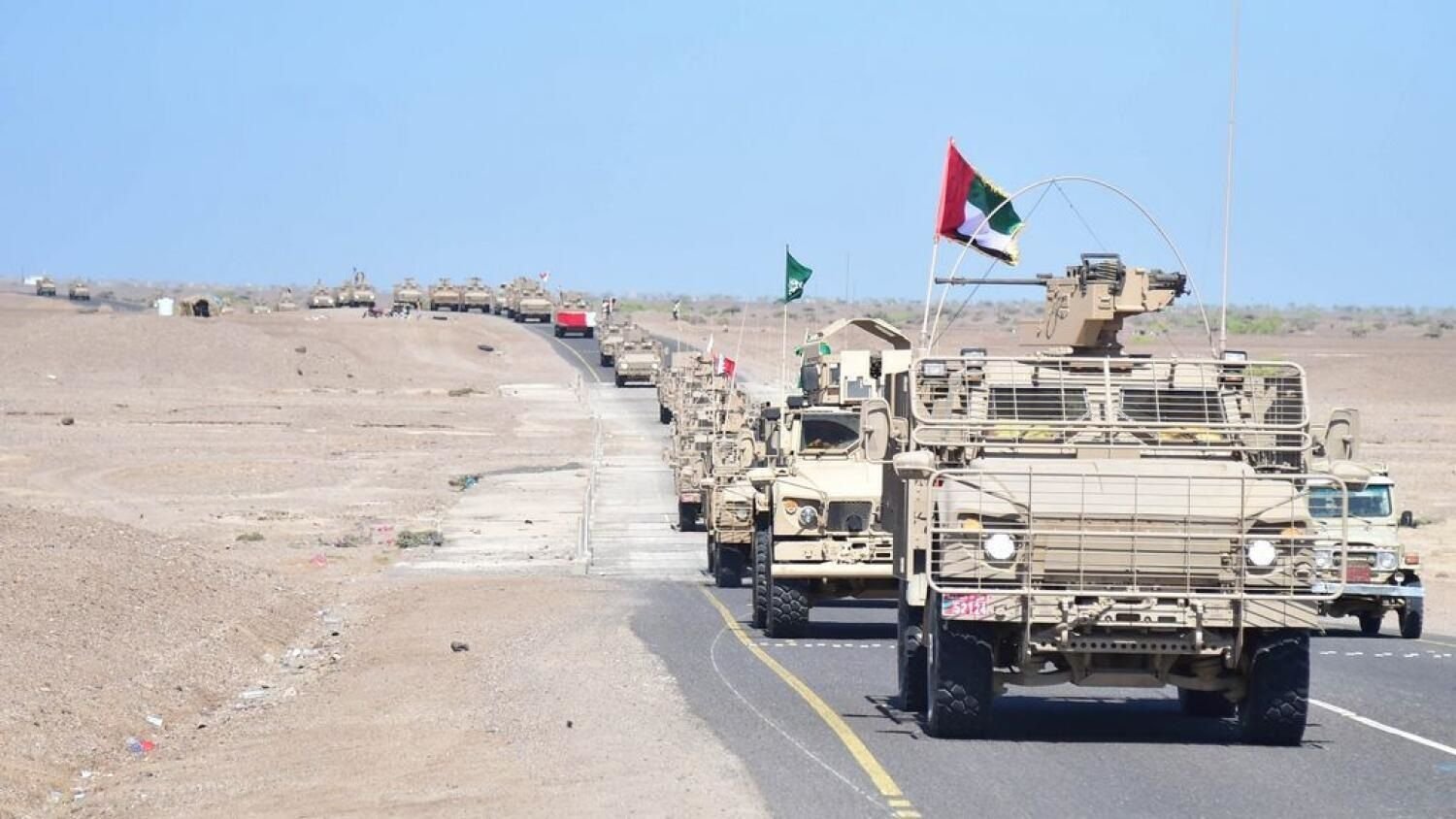
ADEN, Yemen: The United Arab Emirates announced early Saturday that it has withdrawn all its troops from Yemen, a major development that underscores widening fractures within the Saudi-led coalition and signals a potential turning point in the country’s long-running conflict. In a statement, the UAE Defense Ministry said the pullout followed a previously announced decision to conclude the remaining missions of its counterterrorism units. The withdrawal, it said, was carried out safely and in coordination with regional partners. The announcement came after days of military airlifts, as Emirati forces disengaged amid escalating clashes between Saudi-backed units and UAE-supported southern separatists.
The move coincides with Saudi Arabia’s increasingly direct military actions against the Southern Transitional Council (STC), an Emirati-backed group seeking independence for southern Yemen. On Friday, Saudi warplanes struck STC camps and military positions in Hadramout province as Saudi-aligned National Shield Forces attempted to seize control of the facilities, according to separatist officials.
The airstrikes marked one of Riyadh’s most direct confrontations with the STC to date, following earlier attacks on separatist positions and what Saudi officials described as a shipment of Emirati weapons bound for the group.
READ THE FULL E-MAGAZINE | WorldAffairs: Where Power Shifts, Economies Collide, and Global Policy Is Decoded
Saudi Arabia, the UAE, and their allied Yemeni forces have long presented a united front against Iran-backed Houthi rebels, who control much of northern Yemen. The coalition’s stated aim has been to restore the internationally recognized government, ousted from the capital, Sanaa, nearly a decade ago. However, growing tensions between Riyadh and Abu Dhabi and between their respective local allies now threaten to unravel that alliance. Analysts warn that the infighting could plunge southern Yemen into deeper instability and accelerate the country’s political fragmentation.
Southern Separatists Escalate Push for Independence
In a further escalation, STC leader Aidarous al-Zubaidi released a video statement announcing that a newly issued 30-article “constitution” would govern southern Yemen for two years, after which a referendum would be held on self-determination. The document proclaims the creation of the “State of South Arabia,” covering territory that once formed the People’s Democratic Republic of Yemen, the independent southern state that existed from 1967 to 1990. Al-Zubaidi warned that if rival factions reject dialogue or pursue military action, “all options remain open.” The declaration represents the STC’s most explicit step yet toward independence, raising concerns that political negotiations could give way to open conflict.
Clashes Intensify in Hadramout
As part of de-escalation efforts, the Saudi-led coalition has demanded that STC-linked Southern Shield forces withdraw from Hadramout and Mahra governorates. The STC has refused to relinquish seized camps or hand over weapons. Ahmed bin Breik, a senior STC official and former governor of Hadramout, said Saudi-backed National Shield Forces advanced on two separatist camps, prompting Saudi airstrikes after STC fighters refused to retreat. Mohamed al-Nakib, a spokesperson for STC-backed forces, said the strikes caused fatalities, though no figures were provided. WNN could not independently verify the claim. Al-Nakib later said intense clashes erupted across several areas of Hadramout, with the outcome remaining unclear as of Saturday.
Diplomatic Tensions and Airspace Dispute
The UAE Foreign Ministry said Abu Dhabi was dealing with the situation with restraint and coordination, emphasizing a foreign policy that prioritizes regional stability and de-escalation. Despite its military withdrawal, the UAE remains politically influential in southern Yemen through its backing of the STC. Meanwhile, Saudi Arabia accused the STC of obstructing diplomatic efforts. In a post on X, Saudi Ambassador to Yemen Mohammed al-Jaber said the kingdom had made “all efforts” over recent weeks to persuade the STC to halt escalation and withdraw from Hadramout and Mahra, but was met with what he described as “continued intransigence” from al-Zubaidi. Al-Jaber said the STC prevented a Saudi delegation’s aircraft from landing in Aden, despite prior coordination with some separatist leaders aimed at finding a solution that would serve the public interest. Yemen’s Transportation Ministry, aligned with the STC, said Saudi Arabia had imposed new requirements mandating that flights to and from Aden International Airport undergo inspection in Jeddah. The ministry denounced the reported decision, which Saudi authorities have not confirmed.
A spokesperson for the transport ministry said late Thursday that all flights between Aden and the UAE had been suspended until Saudi Arabia reverses the measures.
As Saudi Arabia intensifies efforts to assert control and the UAE steps back militarily, Yemen appears to be entering a new and uncertain phase of conflict not only with the Houthis, but increasingly within the coalition itself.
-Sana Hamed
READ THE FULL E-MAGAZINE | SUBSCRIBE WorldAffairs To Understand the World Before It Shapes You