



DOHA, Qatar: Qatar’s Energy Minister Saad al-Kaabi said he is optimistic that the European Union will address industry concerns over its sustainability legislation by the end of December, as tensions over the EU’s Corporate Sustainability Due Diligence Directive (CSDDD) intensify. Qatar has repeatedly voiced frustration over the directive and even hinted that it could reconsider gas supplies to Europe if the rules are not adjusted. The CSDDD’s provision allowing fines of up to 5% of a company’s global revenue has alarmed Doha and major energy producers, who argue the penalties are disproportionate. Al-Kaabi has also stressed that Qatar will not commit to net-zero emissions targets.
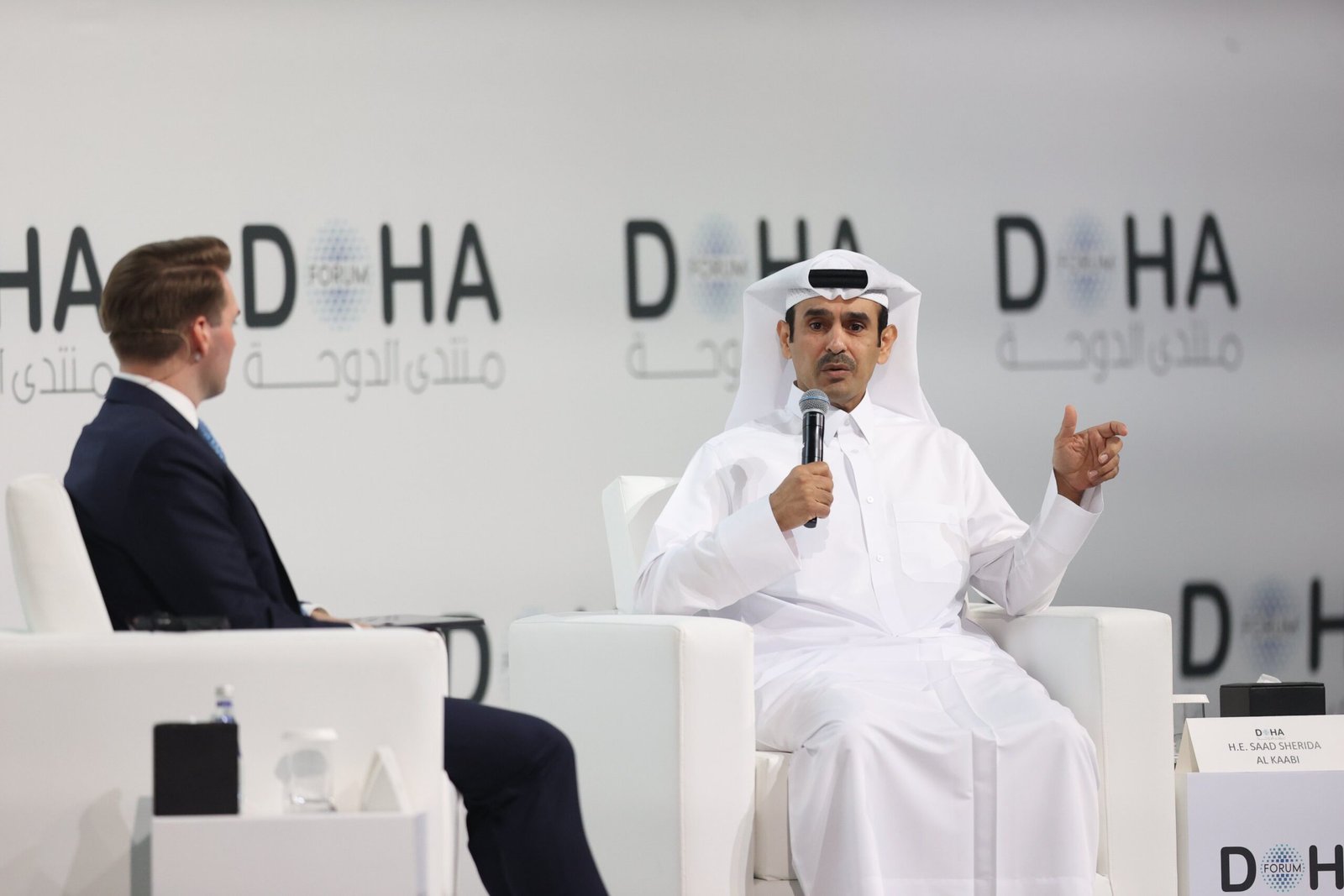
Speaking at the Doha Forum, al-Kaabi said global gas demand will remain strong, driven significantly by the rising energy needs of artificial intelligence. He projected LNG demand could reach 600–700 million tonnes annually by 2035 and stated he has “no worry at all about gas demand in the future,” pointing to AI as a major driver. Qatar’s North Field expansion is set to increase LNG production to 126 million tonnes per year by 2027, an 85% jump from the current 77 million tonnes. He also confirmed that the first Golden Pass LNG train, a joint venture with ExxonMobil in Texas, is expected to begin operations in early 2026. According to the minister, oil prices between $70 and $80 per barrel would allow companies to invest sustainably, while prices above $90 would be excessively high. He further warned that rapid real estate development across the Gulf could risk a housing bubble.
ExxonMobil CEO Darren Woods has echoed similar concerns about the CSDDD. Speaking at the ADIPEC conference in Abu Dhabi last month, Woods warned that the company might not be able to continue operating in the EU if the directive is not softened. He argued that the legislation, if applied globally, would make it “impossible” for ExxonMobil to remain competitive, and urged business leaders worldwide to push back. Despite sustained lobbying by energy producers, Woods said the EU has not made any significant changes to the draft law.
The CSDDD aims to strengthen corporate accountability for human rights abuses and environmental harm across global supply chains. It requires large companies to identify, prevent, and mitigate risks including forced labour, child labour, discrimination, pollution, biodiversity loss, and deforestation. Initially applying to firms with more than 500 employees and €150 million in turnover, the directive will gradually expand to cover smaller companies in high-risk sectors, aligning business practices with the Paris Agreement and UN human rights standards.
-WNN, Doha